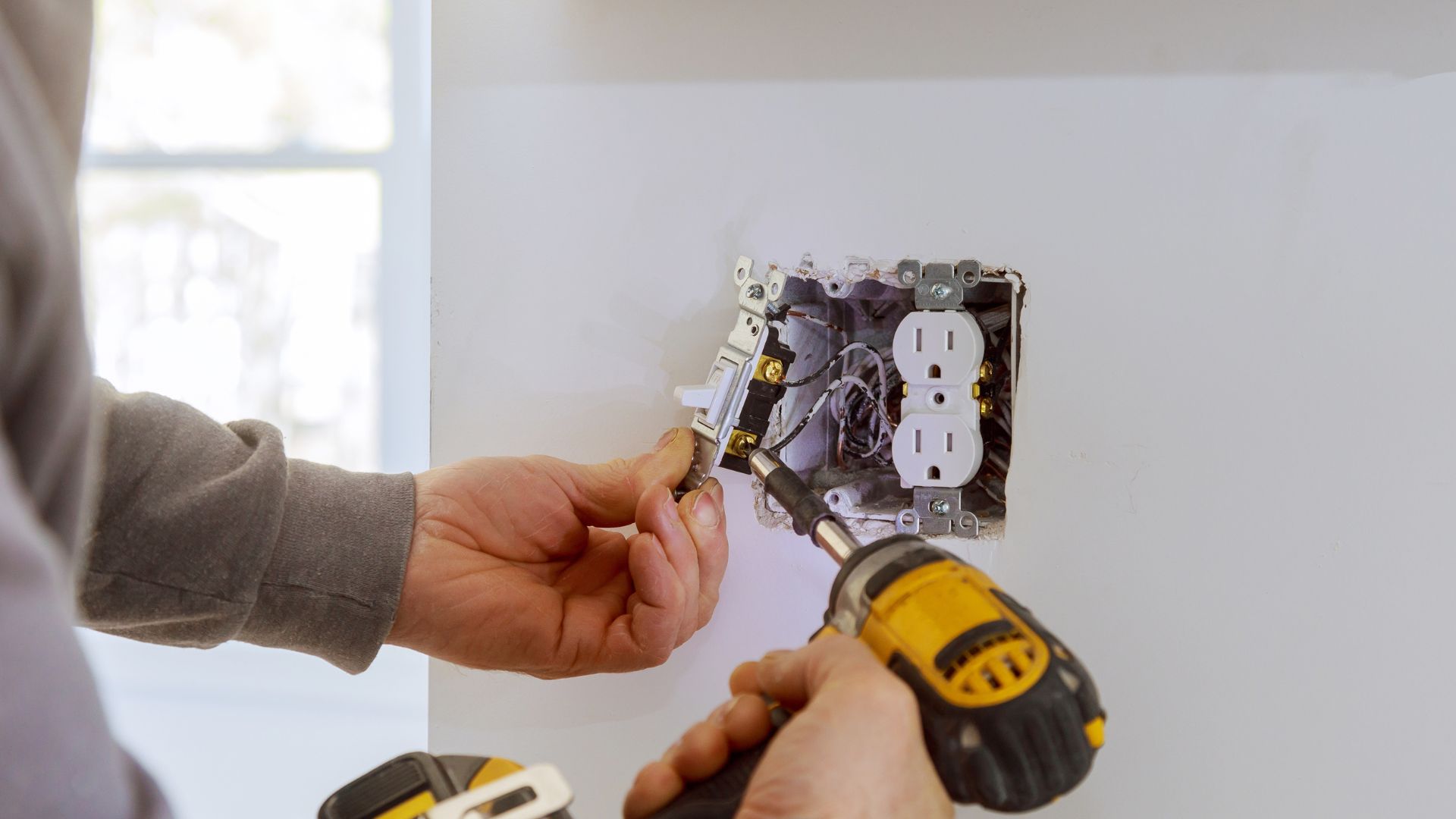
Image of an electrician installing a new electrical outlet

Outlets Not Working? Common Causes and Fixes

After plugging in your laptop, you realize that it never actually began charging. You test out a lamp and discover that the outlet’s not working.

While it might seem like a minor annoyance, an electrical outlet not working may indicate underlying electrical problems. To avoid safety risks and electrical hazards, it’s important to get your outlet repaired by a professional electrician.

So, why is my outlet not working? And, more importantly, what can be done about it? Read on to learn more about how to address this unique problem.

Why Electrical Outlets Stop Working

Electrical outlets connect your home’s appliances to the electrical system through a hot, neutral, and ground wire. The hot side carries electrical current into the outlet, while the neutral side allows it to return to the panel. Throughout the process, the ground wire serves as a safety feature so that excess electricity can be diverted.

If your outlet is not working, a few common issues can be in play. Excess wear, wiring problems, and overloaded outlets can often lead to non-functioning outlets. While some dead outlet fixes are fairly easy, others will require professional electrical help.

Signs You Have a Faulty Electrical Outlet

In most cases, it’s fairly easy to tell if your standard or GFCI outlet is not working because you won’t be able to use appliances at the outlet. Other symptoms can also occur that can help you determine why the outlet has stopped working. Remember to take note if any of the following symptoms occur.

  • No power at all
  • Burning odors
  • Discoloration near or on the outlet
  • Intermittent power
  • Loose plugs
  • Sparking
  • Buzzing noises

Common Causes of Outlets Not Working

Why is my outlet not working? There are a few common reasons why you might have an electrical outlet not working. While some of the following causes can be handled on your own, others will require the support of a licensed electrician.

Tripped Circuit Breaker

If your outlet stopped working suddenly, it may be due to a tripped breaker. This is by far the most common reason. 

To remedy this problem, check your breaker panel. Make sure the breaker switch is all the way off, then turn it on again. If a tripped breaker was the problem, this should fix it. 

However, you shouldn’t reset the breaker repeatedly. If it keeps tripping, there is an underlying electrical issue that needs to be addressed.

Tripped GFCI Outlet

A ground-fault circuit interrupter (GFCI) is a specialized outlet that is designed to shut off power if a ground fault occurs. As soon as leakage or an imbalance happens, the GFCI outlet shuts off power to the entire circuit within milliseconds. In essence, this outlet compares the entering and exiting current levels. If the levels of current do not match, it automatically shuts off.

This is especially important in areas that are prone to moisture because water can conduct electricity away from the outlet. For example, GFCIs are typically found in kitchens, bathrooms, and garages. Once the GFCI is triggered, you can reset it by unplugging everything from the circuit and pressing the reset button. If this doesn’t work, check to see if the breaker has tripped.

Loose or Damaged Wiring

In older homes, loose and damaged wiring is fairly common. Unfortunately, this is not a DIY dead outlet fix. Faulty wiring can be dangerous for your home and your loved ones, so you should reach out for professional repairs right away.

Overloaded Circuit

If there are too many appliances on one circuit, it can cause the circuit to shut down. To avoid this issue, you need to reduce the number of appliances on the circuit. Then, reset the breaker if it has tripped.

Worn-Out Outlet

Over time, outlets can start to degrade. You may notice discoloration around the outlet or loose plugs. If this is the problem, you’ll need to reach out to our team for a professional electrical repair in Bend, OR.

Burned or Faulty Outlet

When an outlet becomes damaged, it can stop working properly. Because this is a major fire hazard, you should get it checked out by an electrician right away.

Quick Fixes You Can Try Safely

Before you start searching for an electrician in your area, there are a few DIY solutions you can try first. If these steps do not work, you’ll need to get professional repairs.

  • Reset the breaker if it has tripped.
  • Reset GFCI outlets.
  • Test another outlet to see if the appliance works in a different location and to determine if the outlet or the circuit is the problem.
  • Unplug devices from overloaded circuits.

Important Safety Note: Never open or repair electrical panels or wiring on your own. These tasks should be left to qualified electricians.

When To Call a Professional Electrician

If your attempts to fix the dead outlet do not work, it is time to call a professional. You should also reach out for help if you experience any of the following issues.

  • The outlet still won’t work after you reset the outlet or breaker.
  • You notice a burning odor.
  • There are sparks coming from the outlet.
  • Multiple outlets are not working.
  • The breaker trips repeatedly.

Schedule electrical repairs in Bend or Redmond today.

Are Dead Outlets Dangerous?

Absolutely. If the dead outlet is due to wiring issues or overheating, it can be a fire hazard. The wire can overheat and melt the insulation, allowing the electricity to escape and start a fire. By getting this problem fixed as quickly as possible, you can prevent this issue from taking place.

Repair vs. Replacement: What To Expect

As a homeowner, it’s important to know when a simple repair is enough and when an entire outlet replacement is necessary. 

  • Cost: Replacing an outlet and repairing it tend to cost fairly similar amounts. Unless the repair is fairly straightforward and inexpensive, it may be better to spend slightly more and get a replacement instead.
  • Age: Once outlets are 20 years old, they are more likely to malfunction. At this point, investing in a replacement is the wisest course of action.
  • Safety: Any sparking, scorch marks, buzzing noises, or physical damage are signs you need a full replacement because these symptoms mean your family’s safety could be at risk.

To improve your family’s security or convenience, you may also want to upgrade your electrical outlet to a GFCI, AFCI, or USB outlet. As mentioned before, GFCIs are useful in moisture-prone rooms. AFCI outlets are effective at protecting against fires in your family’s living areas. Meanwhile, USB outlets let you enjoy the convenience of charging USB-A and USB-C ports without requiring an adaptor. 

Preventing Outlet Problems in the Future

Once you’ve determined the right dead outlet fix, the next step is preventing this problem from recurring in the future. Through the following prevention techniques, you can ensure the safety of your home’s electrical outlets.

  • Never overload your circuits.
  • Upgrade older wiring, especially aluminum wiring.
  • Schedule regular electrical inspections.
  • Install surge protection in your home.

Ready to improve your family’s safety? Book an electrical inspection with Central Oregon Electrical today.

Why Choose Us for Electrical Repairs

Bend and Redmond residents turn to us for a few key reasons.

  • Local Expertise: We understand the local area, so we know what type of solutions are necessary.
  • Licensed Electricians: Thanks to our licensed electricians, your family can enjoy better peace of mind.
  • Fast, Reliable Services: Our team is committed to providing high-quality services and long-lasting results.
  • Experience With Older Homes: As homes age, they require specific types of upgrades and repairs. We understand the kind of electrical services Central Oregon homes need.

Contact our team for fast electrical services.

FAQs

Why did my outlet suddenly stop working?

An electrical outlet not working may be due to a tripped breaker or GFCI outlet. It can also occur because of loose or faulty wiring, overloaded circuits, and burned or worn-out outlets. If basic troubleshooting doesn’t help, it’s important to get this electrical problem checked out by a professional.

Can one bad outlet affect others?

Absolutely. If one outlet on a circuit stops working, the others on the circuit may shut off as well. With GFCI outlets, this is part of the outlet’s design. Additionally, older homes are often daisy-chained, which is why multiple outlets will stop working at once.

Is it safe to use an outlet that works intermittently?

No, it is not. If your outlet keeps having problems, there is an underlying issue that needs to be addressed. Continuing to use the outlet can lead to a fire, electric shock, and damage to your electrical system.

How much does it cost to fix an outlet?

Repair costs fluctuate based on regional labor rates, the complexity of the circuit, and any underlying wiring issues discovered during the process.

  • Market Variance: Expenses are typically higher in metropolitan areas or regions with an elevated cost of living due to increased overhead and professional licensing fees.
  • Scope of Work: Basic replacements are standard, but costs increase if the technician must troubleshoot faulty breakers, upgrade ungrounded wiring, or perform “fish-in” repairs through finished walls.
  • Service Minimums: Many licensed electricians charge a flat diagnostic fee or a minimum service call rate regardless of the repair’s simplicity.

Final Thoughts

If your outlet’s not working, our team is here to help. While most outlet issues are fixable, they must be addressed right away because of the safety risks involved. Our electricians offer 24/7 emergency support, so you can get the help you need.

Call Central Oregon Electrical for expert electrical repairs today.

The Real Cost of Ignoring HVAC Maintenance

Heating, ventilation, and air conditioning (HVAC) maintenance is like brushing your teeth and scheduling dental checkups. If HVAC maintenance is ignored, it leads to higher costs and more extensive damage. Routine maintenance is essential for spotting and fixing minor problems before they escalate.

As a homeowner, it’s easy to forget about scheduling an HVAC tune-up until it’s too late. To see how neglected maintenance impacts your bottom line, let’s dive into reasons why maintenance gets ignored, the consequences, and what you can do about it.

Why HVAC Maintenance Gets Ignored

Most homeowners aren’t deliberately skipping their essential maintenance. Instead, we often find that maintenance is ignored for some of the following reasons.

  • “It’s working fine”: When you don’t notice any apparent issues, it doesn’t seem like you need to schedule a tune-up. In reality, there are likely hidden problems occurring behind the scenes. Tune-ups can spot these issues before they become major repairs.
  • Busy Schedules: Many Americans are constantly rushing between work, school, and home. Trying to add an appointment to an already full schedule feels impossible, so some people skip their tune-ups entirely.
  • Trying to Save Money: Other people are concerned about the cost of booking a furnace, AC, or heat pump maintenance appointment. Unfortunately, trying to save money upfront simply leads to more costly bills in the long run.
  • Not Understanding What Maintenance Includes: If you don’t know what happens during routine maintenance, it’s hard to appreciate the benefits. At Central Oregon Heating, Cooling, Plumbing & Electrical, we strive to help local residents understand what happens during routine tune-ups and why they are important.

The Hidden Financial Cost of Skipping HVAC Maintenance

Over time, the costs of skipping your heating and cooling maintenance can quickly add up. From higher energy bills to costly emergency repair fees, there are many unnecessary expenses that occur when you don’t complete your routine maintenance.

1. Higher Energy Bills 

Maintenance is necessary for cleaning the components in your HVAC system. As these components become dirtier, they also get less efficient because of the added strain on your HVAC motor. The HVAC unit has to run longer to reach the same temperature, resulting in higher energy bills.

2. More Frequent Repairs

Delaying furnace and AC maintenance in Bend can also get expensive because of the cost of HVAC repairs. Tune-ups are a chance to catch minor, unnoticeable problems before they escalate. If these issues aren’t discovered, they can quickly spiral into expensive, preventable breakdowns.

3. Shorter System Lifespan

All of these factors contribute to shorter system lifespans. Normally, a well-maintained furnace will last for more than 15 years. Heat pumps and ACs typically last for 10 years or longer. If these systems are neglected, it can cut their lifespans by years. 

To see how this plays out in the real world, let’s look at some standard costs.

The cost of a tune-up versus the cost of a replacement is strikingly different. Maintenance can also become even cheaper through an HVAC maintenance membership plan, making routine tune-ups far more affordable than a replacement.

4. Emergency Repair Fees

Finally, neglected maintenance increases the likelihood of emergency repairs. These repairs tend to happen during periods of peak use, which means you’ll likely pay peak season pricing. If the breakdown occurs outside of normal business hours, after-hours costs may also be involved.

Comfort Problems That Come From Neglect

While neglect can lead to dramatic issues, such as a complete HVAC breakdown or cracked heat exchanger, there are also more subtle signs.

  • Uneven Temperatures: Your HVAC system will struggle to meet and maintain the appropriate temperature when it isn’t cared for properly. There may also be inconsistent temperatures in different parts of your home.
  • Weak Airflow: Clogged air filters, leaky ducts, malfunctioning blower motors, and other issues can cause poor airflow.
  • Strange Noises: A wide range of sounds can be heard if a part is failing and needs to be repaired.
  • Poor Humidity Control: If your HVAC system is incorrectly sized or experiencing short cycling, you’ll often notice poor humidity control. This can leave you feeling clammy in the winter and sticky in the summer.

Health and Safety Risks

Besides the added costs, poor HVAC maintenance can result in a range of different health and safety risks.

Poor Indoor Air Quality

When your AC and furnace maintenance is neglected, dirt and dust can get into your HVAC system. From there, the dust can be blown throughout your home. Dirty filters are also less effective at blocking pollen and allergens. 

If your condenser and evaporator coils aren’t cleaned properly, they can develop mold. Once this occurs, the mold spores can travel throughout your home using your ductwork.

Carbon Monoxide Risk

With heating systems, a cracked heat exchanger can result in carbon monoxide risks. This is one of the leading reasons why preventative HVAC maintenance and safety inspections are so important.

How Maintenance Actually Saves You Money

Routine maintenance doesn’t just improve your indoor air quality. It can also save you money.

  • Improve Your Efficiency: Dirty components, clogged filters, and other maintenance issues cause your system to work harder, dragging down its energy efficiency. 
  • Avoid Costly Repairs: Better maintenance results in fewer repairs.
  • Protect Your Warranty: Many manufacturers’ warranties explicitly require you to schedule tune-ups. 
  • Extend the Unit’s Lifespan: When an HVAC system is cared for properly, it can last years longer than a neglected unit.
  • Reduce the Number of Emergency Calls: A well-maintained HVAC system is less likely to break down unexpectedly, so you don’t have to pay for expensive emergency calls.

Due to all of these factors, the cost of performing annual maintenance helps you spend less on early replacements and major repairs.

What’s Included in a Professional HVAC Tune-Up

When you schedule an HVAC tune-up, our technicians will take care of the following tasks to ensure your system runs safely and efficiently all year long. For cooling systems, you can also check out our detailed Spring AC Maintenance Checklist to prepare your air conditioner for the summer ahead.

Cooling Season Checklist

  • Clean the condenser and evaporator coils.
  • Check refrigerant levels.
  • Tighten loose connections.
  • Inspect electrical components.

Heating Season Checklist

  • Inspect the heat exchanger.
  • Clean the burners and flame sensors.
  • Perform safety control testing.
  • Check vent pipes for proper drafting.
  • Clean grime off the blower motor and fans.

How Often Should HVAC Maintenance Be Done?

If you want to extend HVAC lifespan and avoid unexpected repair costs, we recommend performing a minimum of one tune-up per year. However, an ideal tune-up schedule involves a spring and fall appointment. During the springtime tune-up, we can care for your cooling system before the first heat wave arrives. Then, a fall tune-up ensures your heating system is prepared for winter.

While two tune-ups a year is our recommendation, there are instances where you may need more frequent tune-ups. As older systems age, they become less efficient and require more frequent repairs. To avoid expensive repairs and unexpected breakdowns, you may want to schedule more frequent tune-ups for older units.

Signs You’ve Already Delayed Maintenance Too Long

As a homeowner, there are a few common signs you’ve waited too long to do routine HVAC maintenance. 

  • Rising Energy Bills: If your energy bills keep increasing without an obvious reason, there is likely something wrong with your HVAC system. To avoid unexpected breakdowns and repairs, it’s a good idea to schedule your next tune-up as soon as possible.
  • Frequent Cycling: When an HVAC system is badly maintained, it will struggle to reach the appropriate temperature. Other issues, like dirty flame sensors and clogged filters, can also trigger the unit to shut off shortly after it starts. 
  • Musty Smells: Your HVAC system should not produce any odd smells. Musty odors may indicate mold growth in your unit or dirt buildup.
  • Older Systems: If your system is already over 10 years old, you shouldn’t wait to perform routine HVAC maintenance. HVAC efficiency declines as units age. Repairs also become more frequent. As a result, it’s important to be proactive about your maintenance and tune-ups.

Is a Maintenance Plan Worth It?

At Central Oregon, we make it easier to take care of your heating and cooling system. With a maintenance plan, you can enjoy a few convenient benefits.

  • Priority Scheduling: Once you are a maintenance member, you go to the front of the line whenever an HVAC malfunction strikes.
  • Discounts: If repairs are needed, our maintenance plan features discounts and special promotions that can lower your overall costs.
  • Peace of Mind: Ultimately, one of the most important reasons why you should invest in a maintenance plan is for the peace of mind. When a winter storm appears or a sweltering heat wave leaves you sweating, you don’t want to spend your time worrying about a potential HVAC failure.
  • Long-Term Savings: With proper care, you can avoid repairs, extend the longevity of your unit, and lower your energy bills. 

When To Schedule Your Next Tune-Up

To keep your system functioning at its best, remember to schedule two tune-ups per year. A spring appointment is perfect for performing air conditioner maintenance and getting your system ready for summertime. Later, you should also schedule a fall tune-up so that your heating system is ready for an Oregon winter.

FAQs

Is HVAC maintenance really necessary?

Absolutely. Routine maintenance can improve your energy efficiency, prevent repairs, optimize performance, and extend the lifespan of your HVAC system. A clean, well-maintained HVAC system also delivers better indoor air quality for your home’s occupants.

How much does HVAC maintenance cost?

The cost varies based on your geographic location, the equipment involved, and who you are hiring to do the work. In most cases, tune-ups cost a few hundred dollars. At Central Oregon, we offer a convenient membership plan that includes two complimentary tune-ups per year.

What happens if you don’t service your furnace?

Initially, nothing will happen. As time goes on, the components will become dirtier and experience more wear. Your energy efficiency will decline, forcing your furnace to work harder to reach the same temperature. In turn, this leads to even more wear. Eventually, you’ll end up dealing with more expensive repairs and a much shorter furnace lifespan.

Does HVAC maintenance lower energy bills?

Absolutely. Sealing and insulating your ducts can boost your HVAC system’s efficiency by 20%. Air filter changes, recharging refrigerant, cleaning coils, and other tasks can significantly reduce the amount you end up spending on your energy costs each month.

How long should an HVAC system last?

It depends on the type of HVAC system. A well-maintained furnace should last 15 years or longer. In comparison, a heat pump or air conditioner will often last 10 years or more if it is cared for properly.

Book Your Next Maintenance Appointment

By setting up your HVAC maintenance appointment and caring for your equipment, you can prevent unexpected breakdowns and repairs. With the help of our team, you can prevent minor issues from escalating into major problems.

Schedule HVAC maintenance today!

Concerned that your HVAC system isn’t functioning at its best? Getting routine spring and fall tune-ups can optimize your energy efficiency and performance. Contact us today to ask about our maintenance plan.

Ac Troubleshooting

Complete Spring AC Maintenance Checklist for Bend, OR Homeowners

With warmer weather just around the corner, it’s time to do your springtime air conditioner maintenance. Routine maintenance is the most important thing homeowners can do to make sure their homes are ready for the first summertime heatwave. By scheduling your next AC tune-up in Bend, OR, you can maximize your energy efficiency, prevent unexpected breakdowns, and ensure the comfort of your family during the hottest part of the year.

Why Spring Is the Best Time for AC Maintenance in Bend

Whether you live in the Northwest Bend or Southwest Bend neighborhood, it’s essential to get ready for warm weather as early as possible. Central Oregon is known for its temperature swings in spring. While daily lows can be as cold as 20°F to 30°F, the highs can range between 70°F and 90°F. 

On top of our rollercoaster weather in springtime, it’s also normal to have sudden heatwaves early in the year. When hot weather unexpectedly appears, you deserve to be fully confident that your AC is ready for the heat. Often, there’s a backlog of people scheduling AC maintenance in Bend once hot weather arrives, so it’s a good idea to get your maintenance work handled early. 

Being proactive about beating the Central Oregon summer heat can also leave you feeling healthier. As people open their windows for spring cleaning, the breeze stirs up dust and allows pollen to get inside. A well-maintained AC is essential for filtering out these allergens and protecting the respiratory health of your home’s occupants.

What Happens If You Skip Your Spring AC Tune-Up?

Initially, the effects of skipping your spring HVAC maintenance will be fairly hidden. As dirty components, wear, and other issues start to compound, you may notice spiking energy bills and lower performance levels. Eventually, a lack of maintenance can result in unexpected breakdowns and a shorter lifespan for your AC.

  • Higher Energy Bills: From clogged air filters to dirty condensing coils, poor maintenance can force your AC to work harder to reach the same temperature. Because of this added effort, your home may experience rising energy bills.
  • Reduced Cooling Performance: When your air conditioner isn’t maintained well, it will struggle to achieve the same performance level. This will be more apparent on the hottest days when it has to run longer to keep your home cool.
  • Unexpected Breakdowns: A tune-up is an opportunity to find, diagnose, and fix problems before they escalate. If these issues aren’t caught when they are small, they’ll eventually result in unexpected breakdowns. Worse still, HVAC failures are more likely to occur when a system is being used the most, such as during the peak of a summer heat wave.
  • Shortened System Lifespan: Eventually, a lack of routine maintenance can significantly shorten your unit’s lifespan.
  • Voided Manufacturer Warranties: Often, manufacturer warranties will require homeowners to schedule routine tune-ups. If you don’t, it can end up voiding your warranty.

Your Spring AC Tune-Up Checklist

To stay on top of your AC maintenance in Bend, OR, we’ve compiled an HVAC  maintenance checklist for springtime. It’s broken down by the tasks that can be handled by yourself and a list of tune-up activities that should be dealt with by the experts.

Homeowner DIY Checklist

As part of your air conditioning maintenance, don’t forget to carry out the following tasks.

  • Replace the Air Filter: A typical air filter should be replaced every 30 to 90 days. Thanks to our high desert climate, we experience more dust than most areas. Because of this, it’s a good idea to be proactive about replacing your air filter as soon as it appears dirty.
  • Clear Debris Around Outdoor Unit: To achieve proper airflow around your outdoor unit, you should routinely clear away debris and plant matter. Ideally, there should be a 2- to 3-foot clearance around the unit.
  • Check Thermostat Settings: Often, one family member will change the thermostat settings and forget to switch them back. From time to time, check your thermostat to ensure it’s in the correct mode. You should also set a wide temperature range so that the HVAC system doesn’t have to kick on all the time.
  • Inspect Vents and Airflow: Anytime your vents are blocked by furniture, clothes, or rugs, it can negatively impact airflow. Obstructed or closed vents cause added pressure inside your ductwork and HVAC system. This makes your system work harder to reach the same temperature. To protect your unit, periodically check your vents and registers to make sure they are open.
  • Test Your System Before Summer Heat Arrives: If your air conditioner breaks down, you don’t want to discover it during our first summer heat wave. To determine if your air conditioner is ready, you should always test it out before the weather warms up. 

Professional AC Tune-Up Checklist

Our Central Oregon climate is known for its sunny, dry days and warm summers, which is why a well-functioning AC is an important comfort tool. During an AC tune-up in Bend, OR, our HVAC technicians will perform the following tasks to get your system ready for summertime weather.

System Inspection

  • Check Refrigerant Levels: First, we’ll check your refrigerant levels and recharge them as needed. If refrigerant levels drop, it forces your HVAC unit to work harder to achieve the same temperature.
  • Inspect Coils: The technician will check your condenser and evaporator coils for signs of damage, freezing, or grime buildup.
  • Test Capacitor and Electrical Connections: For your safety, we’ll verify that your electrical components and capacitor are working safely.
  • Measure Airflow: Testing the airflow allows our team to determine if there are any performance issues with your AC that need to be fixed.

Cleaning

  • Clean Condenser Coils: Dirt and grime can act like an insulating layer on coils, preventing them from transferring heat. As a part of your air conditioning maintenance, we’ll carefully clean your condenser coils.
  • Clean Evaporator Components: When evaporator coils are dirty, it limits heat transfer. Eventually, this can cause the coils to freeze. To ensure your year-round comfort, we’ll clean dust and dirt from your coils.
  • Flush Condensate Drain Line: We’ll flush the condensate drain line to remove any clogs that may have developed over the winter.

Performance Testing

  • Temperature Split Test: With a split test, we can determine how well your AC is functioning. Poor results indicate that a repair may be needed.
  • System Cycling Check: A system cycling check helps us understand why your unit may be short-cycling. As a part of this check, we’ll look at refrigerant levels, system balancing, airflow, thermostat placement, AC size, and electrical components.
  • Safety Controls Inspection: This inspection looks at the operations of your safety controls, such as the safety switch and limit switch. We’ll also make sure all of your electrical systems are working safely.

Efficiency Optimization

  • Calibrate Thermostat: Our team will check to see if your thermostat is calibrated properly.
  • Tighten Electrical Connections: For your safety and the efficiency of your AC, we will tighten loose electrical connections.
  • Lubricate Moving Parts: By lubricating moving parts, we can prevent friction and unnecessary wear.

How a Spring Tune-Up Saves Bend Homeowners Money

By investing in a spring tune-up, homeowners can enjoy a few important benefits.

  • Reduced monthly energy bills
  • Longer system lifespan
  • Fewer emergency repairs
  • Improved cooling performance when the temperature is 90°F or higher

The financial savings can be significant. To get a general idea about the cost differences, let’s look at the average cost of an AC installation in Bend, an emergency repair, and routine maintenance.

As you can see, getting an AC tune-up can help you avoid costly repairs and installations. Plus, routine maintenance saves you money through lower monthly energy bills as well.

How Often Should AC Maintenance Be Done?

To ensure a high level of energy efficiency, maintain your indoor air quality, and prevent an AC breakdown, we recommend getting an AC tune-up once per year. Older systems are more likely to have issues, so they should be maintained twice a year. Additionally, heat pumps generally require a fall inspection as well because they are often used for heating and cooling Oregon homes.

Signs Your AC Needs Immediate Attention

If you notice any of the following symptoms, it may be time to reach out for a professional AC tune-up.

  • Inexplicably higher energy bills
  • Poor airflow
  • Unusual noises
  • Warm air blowing from your vents
  • Musty odors

Is an AC Maintenance Plan Worth It in Bend?

Signing up for HVAC maintenance plans in Bend, OR, can save you money in the long run. Our membership plan features two complimentary tune-ups a year and special promotions. To decide if this option is right for you, discover some of the most popular benefits of having a maintenance plan.

  • Priority Scheduling: When an unexpected breakdown occurs, you don’t want to wait hours or days for an HVAC technician to arrive. If you are part of our membership plan, you can take advantage of priority scheduling and move to the front of the line.
  • Discounted Repairs: Our members get a 20% discount on all of their repairs. Plus, performing routine maintenance reduces the likelihood that you’ll need any repairs in the future. Members can also enjoy having discounts on diagnostic calls and no overtime fees.
  • Seasonal Reminders: One of the biggest reasons why people don’t get a tune-up each year is simply that they forget about it. Once you are a member, you’ll get seasonal reminders when your next tune-up is due. We handle the appointment tracking, scheduling, and work, so you don’t have to.
  • Long-term Savings: By scheduling an AC tune-up in Bend, OR, you can achieve long-term savings. Consistent maintenance reduces the likelihood of repairs, prevents AC replacements, and decreases your energy bills.

FAQs

How much does an AC tune-up cost in Bend?

In the United States, an air conditioner tune-up costs an average of $175 to $350. However, this cost can vary based on the provider and the tune-up type. For Bend homeowners who are a part of our heating and cooling plan, it costs just $25 a month to receive two complimentary tune-ups per year. 

What does an AC tune-up include?

During a professional AC tune-up in Bend, OR, an HVAC technician will inspect the unit for signs of wear. They will clean the condenser and evaporator coils. Then, the technician will check the air filter and lubricate any moving parts. After checking the refrigerant levels, they can recharge the refrigerant as needed. They’ll tighten loose electrical components, clean out the condensate drain line, and perform important safety checks.

How long does AC maintenance take?

Your spring HVAC maintenance will typically take around one to two hours to complete. The length of time depends on the system’s size, condition, and maintenance needs. If you have any questions, an HVAC technician can walk you through what to expect before beginning your AC maintenance.

Can I do AC maintenance myself?

Yes and no. A professional AC tune-up should only be handled by trained HVAC technicians. However, there are many routine maintenance tasks that can be taken care of by homeowners. We strongly recommend changing your air filter and cleaning around your outdoor unit. By performing routine maintenance between your tune-ups, you can help your system last longer.

When should I schedule AC service in Oregon?

We recommend scheduling your AC service in Bend before the weather heats up so that you can avoid the rush. As long as you schedule an appointment before May, you can make sure your air conditioner is ready for the arrival of Central Oregon’s summer heat.

How seasons affect your indoor air quality

How to Reduce Humidity & Improve Air Quality in Bend This Spring

From rising pollen counts to higher humidity levels, spring weather can have a negative impact on indoor air quality (IAQ) in Bend and Redmond. Fortunately, there are a few steps you can take to alleviate your indoor humidity and prevent allergy flare-ups. Central Oregon Heating, Cooling, Plumbing & Electrical can assess your air quality and determine the best remediation approach.

Why Spring Creates Indoor Air Quality Problems

When springtime arrives in Central Oregon, it brings along increased rain, damp conditions, and rising humidity levels. As the weather warms up, pollen also gets into your heating, ventilation, and air conditioning (HVAC) system. 

During the winter, homes are tightly sealed up. When homeowners open their windows in the spring, all of the dust that settled during the colder months is stirred up. Because of the pollen infiltration, dust issues, and mold growth, many people experience spring allergies indoors and outdoors.

How High Humidity Affects Your Home

For Bend and Redmond residents, we generally recommend an indoor humidity level between 30% and 50%. If your humidity levels get too high, it can cause:

  • Mold and mildew growth
  • Musty smells
  • Warped wood and furniture damage
  • Strained HVAC systems
  • Increased allergy issues
  • Higher cooling bills

Signs Your Indoor Air Quality Is Suffering

You may be having HVAC air quality issues if you notice the following symptoms.

  • Frequent allergy flare-ups
  • Condensation on your windows
  • Persistent musty odors, even when the AC is on
  • Excessive dust buildup
  • Stale or stuffy air

If your indoor humidity is too low, there may be static when you do laundry. You may also notice symptoms of dry air, such as chapped lips, dry skin, and nosebleeds.

How Your HVAC System Impacts Humidity and Air Quality

Ensuring the right HVAC maintenance and equipment is about more than just heating and cooling your home. Through a well-maintained HVAC system, you can improve air quality in your home, lower the humidity level, and enjoy a better level of comfort.

1. Air Filters and MERV Ratings

A higher MERV rating means an air filter has a higher capacity for moving particles from the air. Typically, a MERV 11 to 13 rating will work well at trapping pollen and dust. Because of how small these airborne particles are, lower ratings don’t have the filtration capacity to catch common allergens.

2. Whole-Home Dehumidifiers

By getting a dehumidifier, you can reduce humidity in your house. Unlike a portable dehumidifier, these units are able to lower humidity in your entire home. They also require significantly less cleaning and refilling.

Instead, whole-home dehumidifiers are connected to your HVAC system so that all of your home’s air supply can be treated. Because of this, these dehumidifiers for your home are ideally suited for damp climates and homes that have consistent humidity issues.

3. Air Purifiers and UV Lights

Bacteria and mold spores can harm your indoor air quality and your overall health. Air purifiers work by filtering or neutralizing pathogens in the air. With a UV light, the genetic material in bacteria, viruses, and mold spores is disrupted. As a result, they can reduce indoor allergens and improve your overall IAQ.

4. Proper Ventilation

While opening your windows might feel effective for your home’s ventilation, it isn’t a good idea during pollen season. Instead, it’s better to choose alternative approaches to home ventilation, such as exhaust setups and fresh air exchange systems. Your bathroom and kitchen exhaust can vent excess humidity, foul odors, and combustion byproducts outside of your home. Meanwhile, a fresh air exchange system exchanges stale indoor air for fresh outdoor air. Heat is transferred from one source to another, reducing the amount of energy needed to heat and cool your home.

5. HVAC Maintenance and Coil Cleaning

Dirty coils and clogged drain lines increase moisture, leading to mold growth. By investing in routine maintenance, you can prevent mold from growing inside your home.

DIY Tips To Improve Spring Air Quality

To boost your indoor air quality in spring and summer, remember to use the following tips.

  • Replace your air filters every one to three months. 
  • Keep your windows closed during peak pollen seasons.
  • Always run the bathroom fan after showering.
  • Use your ceiling fans to circulate air instead of opening your windows.
  • Make sure your vents are open and unobstructed.

When To Call a Professional

If you’re struggling with humidity control, our team can help. We recommend reaching out to an HVAC technician if you notice the following issues.

  • Persistent mold odors
  • Visible mold
  • Chronic indoor allergies
  • High humidity readings
  • An HVAC system that struggles to achieve an adequate comfort level

Spring Is the Best Time for an HVAC Tune-Up

Before peak season arrives, it’s a good idea to schedule an HVAC tune-up. Besides beating the rush and avoiding unexpected breakdowns, spring tune-ups can also help you clean your HVAC components, boost energy efficiency, and avoid mold growth.

FAQs

What is the ideal humidity level for a home in the springtime?

We generally recommend keeping your home’s relative humidity between 30% to 50% for the best balance of mold prevention and comfort.

Why does indoor air quality matter in Central Oregon?

Indoor air quality matters in Central Oregon because seasonal wildfire smoke, spring pollen, and shifting humidity levels can affect the air inside your home. Poor IAQ can trigger allergies, worsen asthma, cause headaches, and increase the risk of mold growth.

By maintaining your HVAC system, upgrading filtration, and managing humidity levels, homeowners in Bend and Redmond can create a healthier and more comfortable indoor environment year-round.

Do HVAC systems reduce humidity?

Yes, they can. When air passes over the evaporator coils, the water vapor condenses. Then, it is transferred out of your home through the condensate drain lines. 

However, this process only occurs when your heat pump or AC is on. Because of this, many homeowners also install a whole-home dehumidifier to ensure the right humidity level is present all the time.

Can high humidity cause mold?

Absolutely. Mold requires moisture to grow. When the relative humidity is above 60%, it can cause condensation and fuel mold growth. If the relative humidity gets above 70%, mold growth accelerates rapidly.

How do I know if my air quality is poor?

The easiest way to find out is by scheduling a professional air quality test. You and your family members will likely notice symptoms of poor air quality as well, such as allergy flare-ups, respiratory illnesses, asthma attacks, headaches, and fatigue. Over time, your home may develop dust buildup and visible mold growth.

Do I need a whole-home dehumidifier?

If your humidity levels are frequently above the target range of 30% to 50%, a whole-home dehumidifier is a good choice. You may also want a dehumidifier if you frequently notice mold growth, sticky air, or musty odors in your home.

Does indoor air quality matter during winter?

Yes, indoor air quality matters during heating season because homes are sealed tightly to keep warm air in, which also traps dust, allergens, pet dander, and other pollutants inside. As your furnace or heat pump runs, these particles can continuously circulate throughout your home.

Without proper filtration, ventilation, and routine HVAC maintenance, indoor pollutants can build up quickly, which can lead to allergy flare-ups, dry air discomfort, and reduced overall comfort during the winter months.

Carbon Monoxide Safety Tips for Homes with Furnaces

Carbon monoxide is a gas that is produced when wood, gas, and other fuels don’t burn completely. Because it is odorless and tasteless, it can build up to dangerous levels without anyone realizing it.

When wintertime arrives, homeowners in Bend and Redmond have to switch on their gas furnaces to stay warm. However, a faulty furnace can release carbon monoxide into the air. This is why it’s so essential to schedule furnace services, perform necessary repairs, and make sure your carbon monoxide alarm is in working order. 

At Central Oregon, we can help with all of your heating, ventilation, and air conditioning (HVAC) needs. To keep your family safe this winter, we’ll dive into some of the most important carbon monoxide safety tips.

What Is Carbon Monoxide and Why Is It Dangerous?

Fuel-burning appliances produce carbon monoxide as a byproduct. When they are functioning properly and well-vented, there is minimal carbon monoxide produced.

However, poor venting and faulty appliances can increase the amount of this gas released into the air. Because the gas is odorless, tasteless, and colorless, it is impossible for people to detect it.

For many people, the first carbon monoxide poisoning symptoms involve headaches, nausea, and vomiting. The severity of symptoms and how quickly they progress depend on the concentration of carbon monoxide. At high levels, this gas can be fatal in minutes.

Low levels may cause flu-like symptoms. Because the symptoms are less acute with lower levels of carbon monoxide, organ damage and other complications can build up without anyone realizing it. Because low and high levels of carbon monoxide can result in serious health issues and death, it’s essential to detect and fix this issue right away.

Common Sources of Carbon Monoxide in Homes

There are many different appliances that burn carbon-based fuels, such as gasoline, natural gas, and wood. The following appliances are the most frequent sources of carbon monoxide in typical Bend and Redmond homes.

  • Gas furnaces
  • Fireplaces
  • Water heaters
  • Gas stoves
  • Attached garages if vehicles or generators are left running

Signs and Symptoms of Carbon Monoxide Exposure

If you or your loved ones are exposed, you may notice the following carbon monoxide poisoning symptoms.

  • Headaches
  • Dizziness
  • Nausea
  • Fatigue
  • Confusion

As soon as you suspect carbon monoxide exposure, immediately leave your home and get fresh air. Then, seek medical help. A medical professional can determine if there is any organ damage or other issues from your exposure. You’ll also need to call your gas utility, a licensed HVAC technician, or a similar professional to stop the leak, repair the appliance involved, and prevent future issues.

Install Carbon Monoxide Detectors in the Right Locations

One of the most important carbon monoxide safety tips is to install CO detectors in the right locations. To protect your family, there should be a detector outside of every sleeping area and on each level of your home. For example, a three-story home should have a minimum of three detectors so that there is at least one on each level.

Your CO detector placement should also consider how close the detector is to furnaces. It needs to be near enough to detect any carbon monoxide released, but it shouldn’t be too close. Furnaces can release tiny amounts of carbon monoxide during their normal operations, so an overly close placement can cause the detector to pick up harmless levels of carbon monoxide.

Once the detectors have been installed, you should make sure to test them at least once per month. To make sure they’re fully functional, you should also replace the batteries at least once per year.

Schedule Annual Furnace Inspections

As part of your carbon monoxide and furnace safety, you should schedule routine furnace inspections each fall. During the inspection, our HVAC technicians will look for cracks, signs of leaks, and ventilation issues. To ensure the safety of your family, you should only hire licensed technicians to perform your annual furnace inspection.

Keep Furnace Vents and Flues Clear

Besides scheduling a furnace inspection in Central Oregon, there are a few routine maintenance tasks you can handle on your own. Periodically, check to make sure the exhaust isn’t blocked by snow, debris, or bird nests. This can generally be done through a visual inspection.

Because we’re in a high desert climate, dryness and dust can stress your HVAC system. This can lead to a higher likelihood of leaks and repairs. Additionally, altitude can impact combustion, so it’s essential to clean burners regularly.

Never Ignore Furnace Warning Signs

To ensure the safety of your loved ones, don’t ignore red flags. Call for help as soon as you notice any of the following issues.

  • Yellow or flickering pilot lights instead of blue, consistent flames
  • Soot buildup
  • Frequent system shutdowns and short cycling
  • Odd smells

Carbon Monoxide Safety Tips for Winter in Central Oregon

As part of your heating safety in Central Oregon, there are a few day-to-day changes you can make in how you use heat. When temperatures drop significantly in the winter, many homes rely on heavy furnace usage to stay warm. Often, this means that windows are closed as well.

Both of these factors increase the likelihood of carbon monoxide buildup. Simple tasks, like clearing snow from vents, cleaning out chimneys, and maintaining your flues, can ensure good ventilation. Additionally, you should never use a space heater, outdoor grill, or generator indoors or in an enclosed space.

What To Do If Your Carbon Monoxide Detector Goes Off

If your detector goes off, use the following carbon monoxide safety tips to protect your loved ones.

  • Make everyone go outside.
  • Immediately call for emergency medical help if anyone experiences symptoms.
  • Reach out to a licensed HVAC professional to repair your furnace.
  • If you suspect a gas leak, you should also call your utility provider to shut off the gas line.

When To Upgrade an Older Furnace for Safety

There are a few common indicators that it may be time to invest in a new furnace.

  • Your furnace is 15 to 20 years old.
  • You have to perform increasingly frequent repairs.
  • The unit is inefficient or unsafe to operate.

FAQs About Carbon Monoxide Safety

Discover some of the most important carbon monoxide safety tips by checking out the following questions and answers.

What releases carbon monoxide in my house?

Carbon monoxide is released from the burning of any carbon-based fuel. If you have a furnace, water heater, stove, or fireplace that is powered by anything other than electricity, there are potential carbon monoxide risks involved. Through proper care and maintenance, you can ensure each appliance is functioning correctly.

What does carbon monoxide do to humans?

Because it doesn’t have an odor or taste, carbon monoxide can be inhaled without anyone realizing it. Once this happens, the carbon monoxide replaces the oxygen that the person would normally be breathing. Initially, you may notice a headache, nausea, or vomiting. Because of the lack of oxygen and resulting organ damage, carbon monoxide poisoning can quickly become deadly.

Should a carbon monoxide detector be placed high up in my home?

Yes, most manufacturers recommend placing carbon monoxide detectors around eye level (about 5 feet or higher) on your walls. This gas is slightly lighter than air, which makes it rise. As a result, it is easier to detect the gas if the unit is placed at a higher location.

Ensure Your Family’s Safety and Comfort

While there are serious risks to worry about, the right carbon monoxide safety tips can keep your family safe in cold winter temperatures. By scheduling a furnace safety inspection, you can spot potential dangers before they escalate. At Central Oregon, we offer a membership plan that makes getting routine maintenance a breeze and provides an exclusive discount on repairs.

As temperatures drop in Bend and Redmond, Central Oregon Heating, Cooling, Plumbing & Electrical is here to help. Stay safe this winter by booking your next furnace inspection or repairs today. Call 541-227-6258 now!

Heating upgrades

Why Indoor Air Quality Matters More During Heating Season

As the heating season gets into full swing, Central Oregon homeowners face more indoor air quality (IAQ) concerns. Recirculated air, closed windows, and a dry climate can significantly impact your comfort and health. By investing in indoor air quality this heating season, you can prevent respiratory issues, alleviate allergies, and boost your home’s humidity.

For a professional IAQ evaluation, reach out to Central Oregon Heating, Cooling, Plumbing & Electrical.

How Heating Season Affects Indoor Air Quality

When the heating season arrives, there are a few factors that combine to impact air quality in Redmond and Bend homes.

First, heating season air quality is negatively impacted because there’s reduced ventilation. Windows are kept closed because of the weather, which causes air to recirculate. In turn, this makes indoor pollutants build up. Additionally, the furnace’s normal operations cause the airborne particles to spread throughout the home.

Common Indoor Air Pollutants During Winter

In the Bend, Madras, and Redmond area, there are a few indoor air pollutants that are more common during the winter.

  • Dust
  • Pet dander
  • Mold spores
  • Pollen tracked indoors
  • Bacteria and viruses
  • Combustion byproducts

Health Effects of Poor Indoor Air Quality

Around the world, indoor air pollution leads to around 2.9 million deaths per year. Over time, indoor air pollution can increase the likelihood of asthma, emphysema, and other respiratory diseases.

Even in the short run, poor indoor air quality can lead to significant health effects. Allergy flare-ups, dry skin, sinus problems, and dry eyes are frequent issues. Additionally, many people experience fatigue and headaches when the indoor air quality is poor.

Dry Winter Air and Its Impact on Comfort

Because of our high desert climate, it’s normal to deal with dry air in the winter. While part of this is due to the dry outdoor air, indoor factors also play a major role.

When air temperatures drop below freezing, the air has a lower capacity to hold water. As a result, you’ll automatically experience drier air as the temperatures drop.

Once it gets cold out, heating systems get switched on. The increased temperature means that the air has a higher moisture capacity. Thanks to the higher capacity, the air actually pulls moisture from any available source. Wood furniture, skin, lips, and nasal passages can quickly become dried out.

In addition to drying out your skin, wintry weather can increase the likelihood of static electricity. Normally, water molecules in the air serve as conductors so that energy can dissipate. When the air dries out, the static electricity doesn’t have any way to disperse. As soon as you touch a doorknob or a freshly laundered sweater, the charge buildup is able to jump into your body.

While dry air is most noticeable during winter, seasonal changes can affect your indoor air quality year-round. For more seasonal tips, check out our guide on improving indoor air quality in spring and summer.

Why Homes in Central Oregon Are More Affected

When it comes to indoor air quality in winter, there are a few major reasons why Central Oregon homes are significantly impacted.

  • High Desert Climate: In our high desert climate, the air can get dry. The colder nights also result in more heating usage. Because of low humidity, the level of indoor air pollutants is concentrated.
  • Sealed Homes: As winter sets in, the temperatures get cold. To lower the cost of heating homes, architects make local homes well-sealed and insulated. This sealing locks contaminants indoors, worsening indoor air quality in Central Oregon.
  • Increased Furnace Runtime: When furnaces run for extended periods, they contribute to dry skin and respiratory issues. The added air circulation also causes allergens and indoor pollutants to move throughout your home.

How Your Furnace Impacts Indoor Air Quality

While the environment and climate play a major role in determining your indoor air quality during the heating season, your furnace affects it as well. When the air filter is dirty, it allows contaminants to get into your HVAC system and inside your home. Additionally, dirty air filters can lead to overheating and cause premature wear.

Over time, ductwork can collect dust and debris. When your heating system switches on, the air flows through the ducts and blows all of the dust into your home.

If you don’t have an air purifier for your furnace, it could be making the situation worse. A lack of purification allows the buildup to continue, worsening your indoor air quality.

Ways To Improve Indoor Air Quality During Heating Season

There are a few IAQ solutions you can use to enhance your indoor air quality.

Regular Filter Changes

One of the most important things you can do to protect your HVAC system and respiratory health is to change your air filter. Ideally, the air filter should be replaced every 30 to 90 days to prevent dust and debris from getting into your system.

Whole-Home Air Purifier

When homes are sealed up in the winter, a whole-home air purifier is an excellent way to filter contaminants out of the air. Depending on your goals, you can install a HEPA air purifier, a UV purifier, an activated carbon air purifier, or an ionic air purifier. For example, UV air purification can reduce the amount of mold, bacteria, and other pathogens in the air. Meanwhile, a HEPA air purifier is effective at removing allergens, dust, wildfire smoke, and pet dander.

Humidifiers

Dry air can lead to chapped lips, dry skin, and respiratory issues. To boost your comfort and indoor air quality during the heating season, you can install a whole-home humidifier.

When To Consider Professional Indoor Air Quality Solutions

If you’re considering updates to your furnace and indoor air quality systems, our team can help you determine the best options. You may need to invest in IAQ solutions if you’re experiencing any of the following problems.

  • Persistent allergies
  • Odors that don’t go away
  • Frequent illness, especially respiratory illnesses
  • Dust buildup

The Role of Professional HVAC Maintenance in IAQ

By scheduling HVAC maintenance appointments, you can ensure proper airflow, low levels of indoor contaminants, and improved safety.

  • Improve Your Airflow: During the tune-up, we’ll inspect your system. By caring for your HVAC system, we can improve the airflow inside your home.
  • Prevent Contaminants From Circulating: When your ductwork isn’t clean, it can cause airborne contaminants to circulate throughout your home. Through professional HVAC maintenance, you can get your ducts inspected and sealed.
  • Carry Out Important Safety Checks: During your tune-up appointment, our HVAC technician will ensure the safety of your HVAC system. We’ll make sure the electrical systems, gas lines, and mechanical components are all working properly so that your family can enjoy better peace of mind.

Improve Your Indoor Air Quality This Winter

When indoor air quality in the heating season declines, you can’t visibly see the difference. Instead, poor IAQ affects the way you feel and your long-term health. If you live in Bend, Madras, Redmond, or the surrounding areas, it’s essential to schedule an IAQ evaluation. With the help of our experienced HVAC technicians, you can determine the best whole-home IAQ systems for our high desert climate and unique winters.

Reach out to book your furnace maintenance and IAQ consultation today.

Common Heating Problems Central Oregon Homeowners Face (and How To Fix Them)

In a high-desert climate, you can’t afford to go without a furnace or heat pump for long. Before cold wintertime temperatures arrive, it’s essential to schedule routine maintenance and repairs to protect your heating, ventilation, and air conditioning (HVAC) system. 

When dealing with common heating problems in Bend and Redmond, there are certain fixes that can be made on your own. For more challenging problems, you need to get help from a licensed technician. If you are unsure about the cause of the problem or if it is a DIY repair, Central Oregon Heating, Cooling, Plumbing & Electrical can help you determine the best course of action.

Furnace Not Producing Enough Heat

When a furnace is not heating properly, you may notice that the heat is uneven in different rooms. Even when your systems are running, your house may still feel cold.

This issue can stem from a dirty air filter, thermostat problems, or an aging furnace. If your furnace is undersized, it may also struggle to heat your home efficiently.

To troubleshoot, start by checking the air filter on your own. It should be replaced every 30 to 90 days, depending on the manufacturer. During periods of peak usage, filters should be replaced more frequently. You should also check the thermostat settings to ensure the heat mode is on and the temperature is appropriately set.

If these DIY measures are not effective, there are likely more serious issues involved. To access heating service in Bend or Redmond, reach out to our HVAC technicians today.

Uneven Heating Throughout the Home

When it comes to heating problems in Central Oregon, uneven heating performance is a common issue. This often stems from ductwork leaks, poor insulation, or HVAC zoning issues. 

As a homeowner, you can upgrade insulation and seal any gaps around your doors or windows. You should also go from room to room to see if any of your return or supply vents are closed or obstructed.

If you have zoning issues, you’ll need a professional evaluation by an experienced HVAC technician. If a specific area isn’t being heated properly, we can discuss which ductless mini-split solutions may help.  

Furnace Keeps Turning On and Off (Short Cycling)

When furnaces switch on and off rapidly, it is known as short cycling. Besides causing added wear on your heating system, it can also lead to more expensive energy bills.

Short cycling can occur due to a variety of problems. Dirty filters can reduce airflow, leading to overheating. This causes the unit to shut off prematurely and short-cycle. Besides dirty air filters and overheating, faulty thermostats can also lead to this issue.

As a part of your heating system troubleshooting, start by replacing the air filter. However, you’ll need to schedule professional heating maintenance in Bend to resolve overheating issues.

Strange Noises Coming From the Heating System

Heating systems rarely break down without some type of prior warning. Often, unusual noises are an early indication that you should start searching for heating repair near you. The following are just a few of the most common heating system noises and what they mean.

  • Banging: This typically indicates delayed ignition or expanding ductwork.
  • Rattling: Rattling noises may be due to a cracked heat exchanger or loose components.
  • Squealing: If there is a loose fan belt or worn motor bearings, you may hear a squealing noise.
  • Humming or Buzzing: These noises may mean there is a failing capacitor or electrical malfunction.
  • Rumbling: A rumbling sound often means that the furnace is experiencing delayed ignition, which is a safety issue that should be checked out immediately.

If the system is producing loud noises, switch it off. Because many serious issues can cause unusual sounds, it’s essential to call us for professional furnace repairs in Central Oregon to prevent damage.

Rising Heating Bills in Winter

While it’s normal for energy bills to go up in the wintertime, they should be similar to previous winters. If utility costs spike inexplicably, it may be a sign of an inefficient furnace or a lack of maintenance. Alternatively, poor insulation can cause heat loss and result in high energy bills.

To determine the underlying issue, start by scheduling an HVAC tune-up. It’s also a good idea to check your thermostat to make sure the temperature isn’t set too high. For long-term energy savings, it’s a good idea to upgrade to a high-efficiency furnace

Furnace Won’t Turn On at All

If your furnace won’t turn on at all in cold weather, a few issues could be responsible. For example, a tripped breaker can cut power to the furnace. You can easily see if this is the problem by resetting the breaker in your breaker panel. However, if it immediately trips again, schedule a professional inspection right away because a more serious problem may be at fault.

Other than a tripped breaker, pilot light issues, or ignition failure can prevent the furnace from heating your home. However, these aren’t issues that can be handled on your own. To ensure the safety of your family, furnace, and home, call for emergency repairs. Consequently, here is a complete home heating guide for Central Oregon to help you understand common furnace issues, what you can troubleshoot safely, and when to call a professional.

Dry Indoor Air During Heating Season

One of the more common heating problems in Bend and Redmond is dry indoor air. When outdoor humidity levels drop, your indoor air can quickly become dry. Furnaces can worsen the situation by drying out the air even more. You may notice common symptoms of low humidity, such as static electricity and dry skin. 

To remedy this issue, there are a few different indoor air quality solutions you can use. While a portable humidifier can only humidify one room and requires refilling, a whole-home humidifier can ensure your entire home has a stable humidity level. These humidifiers are integrated into your HVAC system, so the heated air is treated before it is sent to each room. 

When To Repair vs. Replace Your Heating System

If you are experiencing furnace problems in winter, you should be proactive about getting repairs performed before a total HVAC failure occurs. In certain cases, a full furnace replacement may be a better option.

During your HVAC appointment, our technicians can evaluate your existing system and determine if a repair or replacement is necessary. The following factors will determine which options make the most sense for your situation.

  • Age of the System: Even with the best maintenance, a typical furnace’s performance and efficiency will start to decline once it is around 15 to 20 years old. At this point, repair costs start to add up quickly. Once it breaks down after the 15-year mark, a replacement is often a better option than performing the first of many necessary repairs.
  • Frequency of Repairs: If your furnace works well and rarely breaks down, performing a repair is often the best financial option. If your furnace stops working in cold weather frequently, it may be a sign that the system is no longer reliable, and replacement could be the safer long-term option.
  • Cost of Repairs: How expensive repairs are is another determinant you should consider. If the cost of repairs is 50% of the cost of a new unit, you’ll be better off replacing it entirely.
  • Efficiency Concerns: Pay attention to your energy bills. If they suddenly spike, it indicates that your heating system may be losing its performance capacity. Rather than pay for expensive energy bills, you may want to invest in a new one. Older units are also known to have lower efficiency levels than modern ENERGY STAR-rated furnaces, so an upgrade can lead to significant energy savings.
  • Comfort-Related Problems: If you experience poor heating performance, hot and cold spots, or other comfort issues, it may be time for an upgrade.

How Preventive Maintenance Can Prevent Most Heating Problems

When it comes to common heating problems in Redmond and Bend, there is truth to the saying that an ounce of prevention is worth a pound of cure. If you want to avoid future heating problems in Central Oregon, a few important preventive maintenance steps are essential. Consistent care can extend the lifespan of your equipment, prevent unexpected breakdowns, improve your energy efficiency, and ensure a comfortable winter for your loved ones.

To keep your heating system functioning at its best, make sure to schedule an annual heating inspection each fall. This inspection is an opportunity to spot minor problems before they escalate. During the inspection, our HVAC technicians will also perform important safety checks.

FAQs

To get a better understanding of common heating problems in Redmond and Bend, check out some of the most frequently asked questions.

What should I do if the condensate drain line freezes on my high-efficiency furnace?

High-efficiency furnaces are more prone to freezing because more water goes through the condensate drain line. If freezing occurs, use warm water or a wet cloth to thaw exposed areas. Never use boiling water, heat guns, or open flames to thaw the drain line.

How long can I expect my furnace to last?

A good, well-maintained furnace will generally last 15 years or more before it needs to be replaced. However, if you’re experiencing more frequent repairs, inexplicably higher energy bills, unusual noises, or uneven performance, it may be time to start planning for a furnace replacement.

When should I schedule furnace maintenance?

We generally recommend scheduling furnace maintenance each fall. This ensures that your unit is ready for peak wintertime usage, and it helps you avoid inconvenient furnace problems in winter.

What are the signs your furnace needs to be replaced?

You may need to get your furnace replaced if your furnace is more than 15 years old. Strange noises, like squeaks, rattles, or banging, are another sign of a potential problem. A sudden spike in energy bills, weak heating performance, and more frequent repair requirements are frequent signs that a furnace needs to be replaced.

How do I know if I need to have furnace maintenance performed?

You should schedule routine furnace maintenance once a year, ideally before the heating season begins. If you’re experiencing common heating issues such as uneven temperatures, unusual noises, weak airflow, or rising energy bills, it may be a sign that your furnace isn’t running efficiently and needs maintenance.

If you notice unusual noises, strange odors, or sudden spikes in your energy bills, it may be time to book routine maintenance. Weak airflow, problems starting, and poor performance are also indications that you need to reach out to our HVAC technicians for help.

Book Your Next Heating Repairs

If you’re facing common heating problems in the Bend, Redmond, and Madras area, we can help. At Central Oregon Heating, local residents can take advantage of seasonal promotions and convenient financing options. We also provide free estimates, so you can easily budget for your future project.

The best time to get repairs is before the weather drops too much. Winter conditions, cold nights, and a high-desert climate aren’t enjoyable when you don’t have a functioning furnace. To ensure wintertime comfort, it pays to be proactive about scheduling your furnace services.

Reach out to schedule your next furnace repair in Central Oregon.

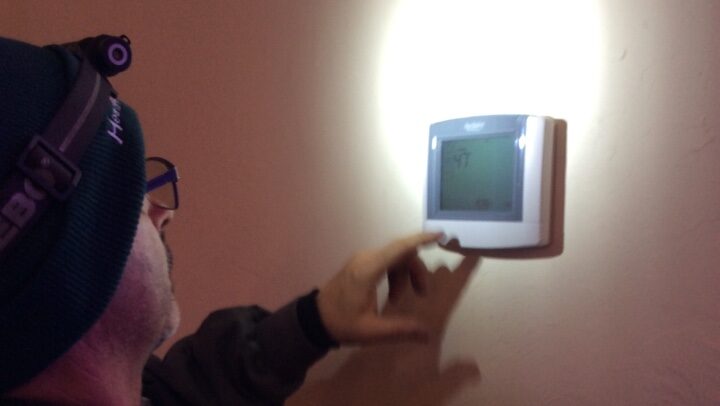
Image of a Central Oregon Heating technician servicing a thermostat in a Bend customer's home

Smart Thermostat Settings for Central Oregon: Best Temps for Winter Nights, Workdays, and Summer Peaks

Central Oregon is known for its major temperature swings, with cold winter nights and hot summer afternoons being the norm. As a local homeowner, you can optimize your energy consumption by installing a smart thermostat. However, this type of tool is only effective if it’s set up properly for your schedule and system type.

To help you stay comfortable all year long, we’ll look at some of the most popular starting temperatures for winter nights, workdays, and summertime peaks. While we’ll cover some of the most common mistakes in heating, ventilation, and air conditioning (HVAC), all of our recommendations are just starting points. Ultimately, the best settings for your home are determined by your family’s safety needs and personal comfort preferences.

Quick “Cheat Sheet” Temperatures

The most effective temperature is going to vary throughout the year. We’ll look at some of the recommended temperatures during the winter and summer for different times of day.

However, it’s important to note that sleeping temperatures can vary based on your health needs, comfort preferences, and the presence of children in the house. Additionally, some people simply like sleeping in a cooler environment.

Winter Starting Points

  • Home and Awake: 68°F to 70°F
  • Sleeping: 62°F to 66°F
  • Away: 60°F to 64°F

Summer Starting Points

  • Home and Awake: 75°F to 78°F
  • Sleeping: 72°F to 75°F
  • Away: 80°F to 82°F

Special Note: If you have a heat pump, scroll down to the heat pump section before you set your HVAC system for wintertime.

Why Smart Thermostat Settings Matter More in Central Oregon

Thanks to our location in Central Oregon, we experience big daily swings in the weather. This means your HVAC system has to recover quickly in the morning and be ready to combat peak heat during the afternoon. By setting the right schedule, you can reduce the risks of overcorrecting and cranking the heat too far in one direction. Smart thermostats are particularly helpful for people who have predictable routines or who use the away setting frequently.

Winter Thermostat Settings for Central Oregon Homes

Once winter arrives, it’s time to update your thermostat settings to maximize comfort and energy efficiency.

Best Winter Settings for Workdays

While each home is different, here’s an example of a good temperature schedule in Central Oregon.

  • Wake (6 a.m. to 8 a.m.): 68°F to 70°F
  • Away (8 a.m. to 4 p.m.): 60°F to 64°F
  • Home (4 p.m. to 10 p.m.): 68°F to 70°F
  • Sleep (10 p.m. to 6 a.m.): 62°F to 66°F

Best Winter Settings for Nights: Comfort Plus Savings

To help you reach the sweet spot between wintertime comfort and affordable energy bills, start by reducing your nighttime temperature so that it is 3°F to 6°F lower. Then, adjust as needed. If you wake up feeling cold, you can increase the temperature by 1°F each night until it feels just right.

Keep in mind that airflow problems can impact how cold each room feels. If your bedroom is much colder than the rest of the house, one of our HVAC technicians can troubleshoot and fix the airflow issues involved.

Weekend Winter Settings

On weekends, you should update the settings based on whether you are home or not. If you spend the day at home, set it so that you are comfortable throughout the day. You can still set the temperature back slightly at night, even if you don’t use the away setting during the day.

Summer Thermostat Settings for Central Oregon Peak Summer Heat

Once summertime arrives, it’s time to update your HVAC system again.

Best Summer Settings for Workdays

Each family has a different daily schedule. You can adjust this sample schedule based on when you are at work, at home, and asleep.

  • Wake (6 a.m. to 8 a.m.): 74°F to 76°F
  • Away (8 a.m. to 4 p.m.): 80°F to 82°F
  • Home (4 p.m. to 10 p.m.): 76°F to 78°F
  • Sleep (10 p.m. to 6 a.m.): 72°F to 75°F

Summer Peak Tips That Actually Work

To stay comfortable without breaking the bank, use the following summer cooling tips.

  • Close the Blinds: During the hottest part of the day, close the blinds on the sunniest side of your house.
  • Pre-Cool Your Home: If your home tends to heat up quickly or you have west-facing windows, pre-cool your home slightly.
  • Use Ceiling Fans: By using ceiling fans, you can stay comfortable at a higher thermostat setting.

Heat Pump vs Furnace: The Settings Should Not Be the Same

Thanks to how energy efficient heat pumps are, more homes in Central Oregon are switching over. Because these units do not operate in the same way as furnaces, the way you set your temperature will also need to vary.

If You Heat With a Gas Furnace or Propane Furnace

Because gas and propane furnaces offer a high level of heat, recovery is easier. This means you can be more aggressive about night away temperatures because your furnace won’t have a difficult time recovering.

If You Heat With a Heat Pump

Heat pumps often use auxiliary heat to recover from major temperature differences, so you don’t want a large winter setback. Instead, keep the setback to just 1°F to 3°F. Then, your thermostat can handle a gradual recovery.

If You Have Dual Fuel

Dual fuel systems are designed to maximize the best of both worlds, offering a heat pump for efficiency and a gas backup. To ensure the best comfort and efficiency, it helps to have a pro set up your thermostat settings and lockout temperature.

Smart Thermostat Features Worth Using (And the Ones That Trip People Up)

To get the most out of your smart thermostat installation, try out the following features.

Scheduling

Scheduling is an effective tool for homes that have set routines. For the best results, stick to a basic schedule that sets different temperatures for time spent away, at home, and asleep.

Smart Recovery

Ideally, the system should start operating early enough that it can hit the target temperature by the time you are awake. Smart recovery helps you maximize comfort, but make sure it doesn’t rely on auxiliary heat all the time.

Geofencing and Auto-away

If your schedule changes constantly, let your smart thermostat sense when you are away and when you’re about to return home. Geofencing is especially effective if everyone has set up the app properly.

Temperature Swing or Cycle Rate Settings (Advanced)

This feature is a good option if your house is short-cycling or overshooting, but it needs to be fine-tuned by a professional.

Common Thermostat Mistakes That Raise Bills (And Wear Out Equipment)

Avoid these common mistakes to prevent unexpectedly high energy bills.

  • Setting an excessive winter setback on a heat pump and then cranking the heat up in the morning.
  • Constantly using manual override instead of adjusting the schedule.
  • Overusing energy by keeping the fan in “On” mode all day.
  • Setting your thermostat based on how one hot room or cold room feels instead of fixing your airflow.
  • Letting sunlight, a TV, or a light get too close to the thermostat can influence its reading.

How to Fine-Tune Your Settings in 15 Minutes

To optimize your thermostat, pick a comfort baseline for each season. Spend three days testing a modest setback for sleep and away settings. Adjust by 1°F until you reach the right temperature level for aux heat usage, comfort, and system run time. If one area isn’t comfortable, focus on fixing its airflow instead of changing the temperature settings for your whole home.

When Thermostat “Issues” Are Really HVAC Issues

The following signs indicate that a thermostat problem is actually due to an HVAC issue.

  • The system can’t reach the set temperature.
  • Individual rooms are abnormally hot or cold.
  • You notice poor airflow or unusual noises.
  • The unit experiences short cycling.
  • Despite running constantly, the heat pump is always behind.
  • Although no changes were made, your energy consumption has jumped significantly since last year.

When to Call a Pro in Central Oregon

If you notice the following problems, it’s time to reach out to an HVAC professional for help.

  • Your smart thermostat isn’t compatible with the HVAC system.
  • Your heat pump often relies on auxiliary heat.
  • The wiring is confusing.
  • You may have duct leaks or airflow problems.
  • Your system needs maintenance.
  • You need help picking a schedule that balances comfort and cost.
  • You need someone to install a smart thermostat upgrade.

FAQs

Over the years, we’ve heard a few common questions about how to set smart thermostats.

What temperature should I set my thermostat to at night in winter?

The best temperature for sleeping tends to be between 60°F and 67°F, with many people preferring around 65°F.

What temperature should I set it to while I’m at work?

When you’re away at work, you can save energy by raising the thermostat setting in the summer and lowering it in the winter. During the winter, drop the thermostat to 60°F to 64°F when you’re at work. In the summer, raise the temperature to 80°F to 82°F when you’re away. By changing your home’s temperature by 7°F to 10°F for just eight hours a day, you can save up to 10% per year on your heating and cooling costs.

Is it better to keep the same temperature all day?

In most cases, it’s a good idea to have the temperature vary during the day. Your comfort needs change based on whether you are at home, at work, or asleep. Additionally, reheating or recooling your home tends to cost less than maintaining the same temperature. However, if you have a radiant heater and a heat pump, it’s a good idea to invest in a smart thermostat.

Why does my heat pump say “Aux Heat” when I change the temperature?

There are a few reasons why your heat pump may say “Aux Heat.” If you set the temperature significantly higher or it’s especially cold out, the auxiliary heat may kick on to make up the difference.

With heat pumps, auxiliary heat is also used when the defrost mode is on. Heat pumps reverse direction when they defrost the outdoor coils, so auxiliary heat is necessary to keep your home warm while the heat pump completes its defrost cycle.

What is the best AC setting during Central Oregon summer peaks?

During summertime peaks, most homeowners will feel comfortable with a temperature range between 75°F and 78°F. When you’re away, you can maximize your energy efficiency by raising the temperature to between 80°F and 82°F.

While temperatures are lower at night, it can still feel quite warm. To help your family sleep comfortably at night, try adjusting the thermostat setting to between 72°F and 75°F.

Should I use Auto, Heat, Cool, or Emergency Heat?

It depends on the outdoor temperature and your comfort needs. Heat is used during cooler parts of the year. The cooling mode is for summertime. Meanwhile, the auto mode is an effective option for most of the year because it can efficiently manage heating and cooling to maintain your indoor temperature.

Finally, emergency heat is only intended for extreme situations. If the temperature is exceptionally cold or your heat pump can’t keep up, you may need to turn on the emergency heat mode.

Do smart thermostats really save money?

Absolutely. Smart thermostats are an efficient way to optimize your energy efficiency while maintaining your comfort. They are able to learn your habits, automate the temperature schedule, and provide convenient geofencing features. On average, investing in a smart thermostat can lower heating and cooling costs by an average of 8% per year.

Optimize Your Smart Thermostat for Central Oregon’s Climate

While there are general guidelines for maximizing your energy efficiency, the best smart thermostat settings will depend on your routine, comfort preferences, and the type of HVAC system you have.

In winter, focus on maintaining a steady level of comfort during the day and setting the temperature slightly back at night. This day-and-night difference should be slightly smaller if you have a heat pump so that your heat pump can easily keep up.

When summer arrives, plan your temperature settings around peak heat. Set a realistic away setting so that you can save money without overtaxing your system when you return.

If your system is struggling or switches to auxiliary heat a lot, we can help. From inconsistent temperatures to common maintenance problems, our HVAC technicians can inspect your unit and help you determine the best option.

Schedule your next inspection or smart thermostat installation today.

Whole-Home Humidifiers for Dry Central Oregon Winters

What do scratchy throats, nosebleeds, static shocks, and dry skin all have in common? If you live in Central Oregon, these are likely all common wintertime experiences. Central Oregon’s winters are quite dry, and indoor heating systems can worsen the dryness.

To help you resolve your home’s dry air, we’ll examine what healthy indoor humidity looks like and discuss the type of humidifier options that will work best for your home.

Why Winter Air Feels So Dry Indoors

When the air is cold, it holds less moisture. Once this outdoor air is heated inside your home, the relative humidity drops even more. This is especially true if you use forced-air heating, which can worsen the dry sensation.

It’s important to note that dryness is more than just a comfort issue. It can impact your home’s appliances and wood. Additionally, dry air can affect how warm your air feels at various temperature levels.

What’s the Right Indoor Humidity Level in Winter?

To get a better understanding of indoor dryness, let’s dive into the best practices for determining the right humidity level.

The Comfort Sweet Spot for Most Homes: 30% to 40% RH

For most homes, the Environmental Protection Agency (EPA) reports that between 30% and 50% is the best relative humidity (RH) level. In our area, homeowners will generally experience the best level of comfort between 30% to 40%. During the wintertime, we recommend setting your RH at 35%.

Adjust Based on Outdoor Temperature and Window Condensation

While 35% is a comfortable humidity level, you also have to worry about condensation forming during very cold temperatures. If you notice any fogging or frosty windows, you should drop the humidity level.

Don’t Guess, Measure

You shouldn’t just guess about how high your home’s humidity is. Instead, install a basic hygrometer on the main floor and near your bedrooms. Humidity can vary between different rooms, especially when you live in a multi-level home.

Signs Your Home Is Too Dry

If you experience any of the following symptoms, your home has dry air.

  • Frequent static shocks
  • Dry, itchy skin that becomes worse indoors
  • Cracked lips
  • Dry nasal passages or an itchy throat when you wake up
  • Houseplants that dry out quickly
  • Shrinking or cracking wood floors, trim, or furniture
  • More dust in the air
  • Portable humidifiers that have to be refilled daily

Signs Your Humidity Is Too High

Sometimes, homes deal with the opposite problem. Your indoor humidity level is likely too high if you notice any of the following symptoms.

  • Window condensation that recurs frequently
  • Musty odors in your corners and closets
  • Damp air, even when your heat is on
  • Visible water spots on your ceilings and walls, particularly in the bathrooms and near windows

Portable vs. Whole-Home Humidifier: What’s the Real Difference?

To solve your humidity issues, set up a whole-home or portable humidifier in your home.

Portable Humidifiers: Pros and Cons

With a portable humidifier, you can enjoy having a low upfront cost. Its small size makes it effective for just one room, and it is easy to set up.

However, you’ll have to constantly refill the unit. Besides the added cleaning requirements, these units also provide inconsistent coverage. They can lead to excessive humidity in a single room while the remainder of your home is still dry.

Whole-Home Humidifiers: Why Homeowners Upgrade

A whole-home humidifier is an effective method for improving your home’s relative humidity. It treats all of the air that runs through your heating, ventilation, and air conditioning (HVAC) system, ensuring a higher level of comfort. It operates in conjunction with a humidistat, so it automatically adjusts your indoor humidity.

Compared to portable units, a whole-home humidifier requires less daily maintenance. You don’t have to fill up the unit yourself, and most of the maintenance work can be done at the same time as the rest of your routine HVAC maintenance. Plus, the added humidity is excellent for improving your home’s dry air and protecting your wood furnishings.

Types of Whole-Home Humidifiers: Which One Fits Your Home?

Whether you want a central humidifier or a bypass humidifier, there are a few different options you can install.

Bypass Humidifiers

A bypass humidifier uses airflow from your HVAC system to add moisture to the air. For the average home in Central Oregon, these humidifiers are a great option. They are known for being extremely reliable and easy to use.

Fan-Powered Humidifiers

With a fan-powered humidifier, there is a fan that can push air through the humidifier. Depending on the setup, a fan-powered humidifier can provide a higher output level than bypass humidifiers.

Steam Humidifiers

Steam humidifiers are known for providing fast, precise humidity control. These units are often the best option for a tight or large home. If you want extra control, a steam humidifier is an effective solution.

However, this type of unit requires more electrical capacity. Because of this, more planning needs to be done before you can set it up.

Decision Helper Box: “What’s Best for You?”

  • Looking for something simple and effective? Opt for a bypass or fan-powered humidifier.
  • Interested in maximizing your output and gaining strict control? Choose a steam humidifier.
  • Unsure about the best option? Get a professional evaluation of your humidity measurements, home size, and comfort goals.

What Installation Usually Involves

At Central Oregon, we carefully walk you through the entire installation process so that you know exactly what to expect. A typical installation requires a location on or near the HVAC system, such as your furnace or air handler. It must have a water supply connection. Depending on the model, it may also need a drain.

As a part of your installation, we will set up a humidistat or smart control. Once all of the installation work is done, the technician will test the humidifier to make sure it’s producing the appropriate humidity level without causing excess condensation.

Because of all the factors involved, the cost and complexity of each installation can vary. Your existing HVAC configuration can also impact the overall price. To help you know what to expect, our technician will walk you through the steps involved and provide a no-obligation quote.

Maintenance: What You’ll Need to Do to Keep It Clean and Working Well

Once your humidifier is installed in your home, the next step is making sure it functions efficiently. The following maintenance tasks can help your humidifier last as long as possible.

Regular Homeowner Upkeep

As outdoor temperatures change, check your humidifier to make sure the settings are appropriate. You will also need to replace the water panel or pad as needed. Throughout the year, you should clean around the unit to make sure it is easy to access.

Professional Maintenance (Recommended)

While you can perform some maintenance tasks on your own, other tasks should be left to the experts. During the seasonal inspection and cleaning, our technician will make sure the unit is draining properly and functioning safely. We’ll also test the humidity output and control settings to ensure optimal performance.

Common Questions We Hear From Central Oregon Homeowners

Over the years, we’ve found local homeowners ask a few common questions about humidifiers.

What humidity should my house be in winter?

In Central Oregon, a relative humidity of 30% to 40% tends to feel comfortable and is low enough to prevent condensation. Ideally, try to keep your humidity level around 35%.

Is 40% humidity too high in winter?

No, 40% is generally a comfortable level for most people. If you notice signs of fogging or condensation on your windows, you should decrease your home’s relative humidity.

Why do my windows fog up when I run a humidifier?

If your humidity level is too high, your windows will fog up. The moist, warm air hits the glass and condenses into fog. To fix this problem, lower your indoor humidity.

Can a whole-home humidifier help me feel warmer at a lower thermostat setting?

Absolutely. Moist air is better at holding heat, so you’ll be able to feel warmer at a cooler temperature.

Do whole-home humidifiers work with heat pumps?

Yes, we can install whole-home humidifiers in homes that have existing heat pumps. There are specific humidifiers that work best with heat pump systems, so call for a professional consultation about the best options for your needs.

How do I know if I need a steam humidifier vs. a bypass unit?

Steam humidifiers are ideal if you have a large home or want a high level of control. Meanwhile, bypass units are good for smaller homes and limited budgets.

How often does a whole-home humidifier need maintenance?

Whole-home humidifiers require professional maintenance at least once per year. However, there are also routine maintenance tasks that homeowners should be performing on an ongoing basis.

Will a humidifier make my home moldy?

As long as your humidifier is set to the appropriate humidity level, it will not make your home moldy. However, a faulty or badly maintained humidifier can cause mold growth. If you are concerned about signs of mold, schedule a professional HVAC inspection right away.

Combat Central Oregon’s Dry Winter Air

In Central Oregon, we have dry winters. To ensure comfort, protect your wood finishes, and reduce static issues, invest in a humidifier installation. In general, most homes will feel best at around 30% to 40%. During cold snaps, you may need to lower this level if you notice signs of condensation.

If you want help picking out the right humidifier this winter, our team can walk you through the best options for your home and comfort goals. Call today to schedule your professional humidifier evaluation.

Hard Water Problems: Signs You Need a Water Softener

When you reach for a glass, you notice that the glassware is strangely cloudy. Your laundry is unusually stiff, and your faucets never appear clean. At night, you slather on lotion to combat dry, itchy skin.

If you’re experiencing these symptoms, you likely have hard water. This water type doesn’t just make cleaning and skincare annoying. Over time, it can shorten the lifespan of your water heater and force it to work harder.

From popular water softeners to effective maintenance tips, we’ll cover some of the problems associated with hard water and what you can do to mitigate these issues.

What “Hard Water” Really Means (And Why It’s Such a Problem)

If you have hard water, it means that there are higher levels of minerals in the water. Calcium and magnesium are normal parts of the water supply, so they’re perfectly safe to drink.

The problem is when these minerals stick to the inside of your plumbing system, fixtures, and appliances. The buildup can gradually restrict the flow of water. In your water heater, it can impact heat transfer, increase wear on your unit, and lead to more frequent repairs. Additionally, hard water can cause other minor annoyances, such as problems rinsing and lathering soap and detergent.

Signs You Need a Water Softener

There are a few common signs you may need a water softener in your home.

White Spots on Dishes, Glass, and Faucets That Keep Coming Back

  • What You’ll Notice: You may notice chalky residue on your dishes after they dry.
  • What It Means: These mineral deposits get left behind after the water has evaporated.

Soap Scum That Clings to Tubs, Showers, and Sinks

  • What You’ll Notice: Your tub, shower, or sink may have a dull film that feels impossible to scrub away.
  • What It Means: This occurs if soap reacts with minerals in the hard water. Afterward, it sticks to the surfaces of your tub.

Dry, Itchy Skin or Hair That Feels Dull After Showering

  • What You’ll Notice: It may feel like using lotion doesn’t improve your skin’s dryness. Even your hair feels heavy and brittle.
  • What It Means: Unfortunately, minerals in hard water can make it difficult for soap to cleanly rinse your skin and hair.

Shampoo, Soap, and Detergent Do Not Lather Like They Used To

  • What You’ll Notice: You feel like you have to use more soap or shampoo to achieve the same level of cleanliness.
  • What It Means: Hard water is known to reduce the effectiveness of soap.

Stiff Towels, Scratchy Clothes, or Laundry That Fades Faster

  • What You’ll Notice: Sometimes, it may seem like the fabric is rough to the touch or doesn’t feel like it was freshly laundered.
  • What It Means: This may be related to minerals and excess detergent building up within the fabric.

Clogged Showerheads or Reduced Water Pressure at Fixtures

  • What You’ll Notice: When showering or running water, you may notice a lower flow rate or uneven spray. You may also have to clean the fixtures more frequently.
  • What It Means: Over time, scale buildup can restrict the aerators and fixture openings.

Frequent Plumbing Annoyances

  • What You’ll Notice: Plumbing issues, like leaks and repairs, may happen more often.
  • What It Means: Mineral buildup can stress components, which leads to more frequent plumbing repairs.

Bonus Sign: Your Water Heater Symptoms Keep Popping Up

  • What You’ll Notice: Pay attention to unusual noises, a sudden drop in your water heater’s efficiency, and inconsistent hot water.
  • What It Means: This occurs because scale builds up inside the water heater and affects its efficiency.

What Hard Water Is Doing to Your Water Heater

If you have hard water, there are a few key ways that it is impacting your home’s water heater.

Scale Buildup Acts Like Insulation Inside the Tank or Heat Exchanger

Over time, minerals can settle and harden. This is especially a problem when the water is heated up. As a result, the system can end up using more energy to perform the same task.

You Get Less Hot Water (And It Runs Out Faster)

As the scale buildup accumulates, it can take up added space inside your tank. This reduces the amount of usable water, so you may have to take shorter showers or wait longer for the water heater to heat more water.

Your Water Heater May Get Louder

The accumulation of sediment and scale can cause popping, crackling, and rumbling noises as heat passes through it.

Hard Water Can Shorten a Water Heater’s Lifespan

Thanks to all of these factors, the heating elements, burners, and internal components have to work harder to reach the same temperature. This added strain increases the likelihood of premature wear and unexpected failures.

Tank vs. Tankless: How the Damage Shows up Differently

Depending on which type of water heater you have, the damage can show up in different ways. With a tank water heater, the sediment and scale collect at the bottom of the tank. This increases the amount of noise, slows the tank’s recovery rate, and decreases its efficiency.

In comparison, tankless water heaters are significantly impacted by how scale clings to the inside of the passages and the heat exchanger. As a result, you may experience fluctuating temperatures, reduced flow, and more frequent maintenance requirements.

How to Confirm You Have Hard Water Without Guessing

If you are uncertain whether you may have hard water or not, look for the following clues.

  • Spots on your glassware
  • Scale buildup on your showerheads and faucets
  • Soap that doesn’t lather

There are also other ways to check for hard water. Basic test strips can tell you your water hardness. You can also check your municipality’s water quality report to find out. If you are on a well, you should just schedule a professional water test.

Ultimately, getting a test is essential if you want to treat your home’s hard water. Before you can set up a water softener, you need a professional test and inspection to determine the hardness level, household water use, and the accurate level of water softening required.

How a Water Softener Helps (And What It Won’t Fix)

Installing a home water softener can help in a few key ways, but it does have limitations.

What a Water Softener Fixes

With a water softener, you can achieve the following goals.

  • Improve your ability to rinse and lather soap
  • Decrease the amount of scale buildup in your appliances and fixtures
  • Improve the way your laundry feels
  • Reduce soap scum
  • Protect your water heater from heavy mineral buildup and resulting damage

What a Water Softener Does Not Fix by Itself

While a water softener has many benefits, it will not fix the following problems.

  • Sediment in your water
  • Chlorine odors or taste
  • Dirty water
  • Most water odors that come from the source water or plumbing

Water Softener Sizing and Installation Basics

Finding the appropriate water softener size depends on your household’s size, hardness level, and water use. This decision is also impacted by your peak flow needs, which is when multiple appliances are using water at once.

To install your new water treatment system, you’ll need to have a space near your main water line and a drain connection for the regeneration discharge. You’ll also need a power source for the control head. Wherever you place the water softener, the main goal is to make sure it is treating water before the water can reach the rest of your home.

What to Do If Hard Water Is Already Affecting Your Water Heater

If your water heater is already affected by your hard water, there are a few steps you can take to protect your unit.

Helpful Maintenance Steps

While you can use these DIY steps to protect your system, getting professional water heater repairs and maintenance is the best approach to preventing damage and improving the longevity of your unit.

Start by flushing the tank to remove any sediment buildup. Then, you can check key components to see if they are noticeably impacted by scale.

However, only a few of these components are readily visible, so the best option is to schedule a professional water heater inspection. If you have a tankless water heater, you should schedule a tankless descaling service to improve its performance.

When It Might Be Time to Replace Instead of Repair

You may need a water heater replacement if you notice the following issues.

  • Leaks around the tank or connections
  • Recurring repairs over a short time period
  • Rust-colored water from your hot water tap
  • Performance drops that don’t go away

When to Call a Pro

Always call for professional help in the following situations.

  • There are loud rumbling or popping noises.
  • The hot water seems to be running out much faster.
  • The tankless unit experiences temperature swings or flow issues.
  • There are signs of moisture, leaks, or corrosion around the unit.
  • You’ve experienced repeated clogs or low-pressure issues.
  • You need a water softener installed, and you want to have it done the right way.

FAQs

To help you figure out the best solution to your hard water, we’ve compiled some of the most frequently asked questions that we hear.

How can I tell if hard water is causing my problems or if it’s something else?

You can tell if hard water is the cause by checking for common signs, such as water spots on glasses, dry skin, and stiff clothing. Because hard water can clog pipes over time, you may notice reduced water pressure. You can also schedule a professional test or buy test strips.

Will a water softener help my water heater last longer?

Absolutely. Water softeners can prevent mineral scale buildup. Because this buildup can clog heating elements and pipes, using a water softener can prevent major sources of wear and damage.

Is hard water the reason my hot water runs out quickly?

Quite possibly. Hard water causes sediment to build up around the bottom of your tank. This forms an insulating layer that makes it harder for the heating element to heat the water and effectively reduces the amount of water that can be heated. To determine if this is the cause for sure, schedule a professional plumbing inspection and maintenance appointment.

Can hard water cause higher energy bills?

Absolutely. When you have hard water, it forms a layer of sediment in your water heater. This makes your water heater work harder to reach the same temperature, which can result in higher energy bills.

However, it’s important to note that there are many potential causes of high energy bills. Because of this, you should always talk to a plumbing expert before beginning any repairs.

Do I need a softener if I already have a tankless water heater?

Yes, you do. Tankless water heaters have smaller, more delicate heat exchangers, so the impact of hard water is often more severe. Over time, hard water can cause scale buildup, increased wear, and a lower system lifespan.

How often should a water softener be serviced?

You should schedule a professional service appointment once per year. If you have an older unit, you may need to get it checked every six months instead.

Between appointments, you should check on the salt levels each month. Once a season, check for leaks and mineral buildup.

Do I still need to flush my water heater if I install a softener?

Yes, you do. The main difference is in how often you have to flush your water heater. With hard water, you often need to flush your tank every 6 to 12 months. Once a water softener is installed, you can often delay your tank flushing to every one to two years.

Is softened water safe to drink?

Softened water is completely safe to drink. The only safety note is for population groups that can’t handle high sodium levels, such as infants who consume formula and patients on a low-sodium diet. Because water softeners replace calcium and magnesium with sodium, they can increase the amount of sodium in your diet.

Prevent Hard Water From Damaging Your Home

For homeowners, the first sign of hard water is often water spots and soap scum. However, these visible signs are only the tip of the iceberg. Inside your water heater, the hard water is causing significant damage.

To avoid expensive repairs, reach out to our experienced plumbers. We can confirm the hardness of your water, address any scale present, and recommend the best softener options for your plumbing system and appliances.

Schedule a water quality and water heater check today to avoid unexpected surprises this season.