 6,500+ 5-STAR REVIEWS
Complete Heat Pump Installation & Replacement in Bend & Redmond, Oregon
-
 Fast, Same Day Service
-
Upfront Pricing, No Hidden Fees
-
Flexible Financing Options
-
Money-Back Guarantee
To learn more, schedule online or give us a call at 541-227-6258.


Give us a call today at 541-227-6258 to schedule your service, repair, or estimate.
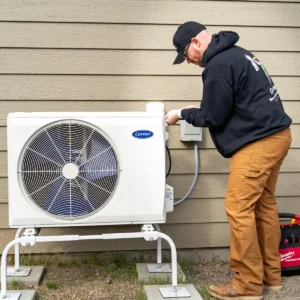 Central Oregon Heating, Cooling, Plumbing & Electrical offers complete heat pump installation and replacement services for homeowners in Bend, Redmond, and throughout Central Oregon. In the high desert climate, where temperatures can shift from freezing winter mornings to warm summer afternoons, a heat pump provides an efficient way to manage both heating and cooling from a single system.
Whether you are installing a heat pump for the first time or replacing an aging unit that no longer keeps up, our team delivers properly sized, professionally installed systems designed for long-term performance and energy savings.
Fill out our online form or call 541-227-6258 today for a free estimate on heat pump installation or replacement in Bend, Redmond, and Central Oregon.
What Is a Heat Pump?
A heat pump is an HVAC system that heats and cools your home by transferring heat rather than generating it. During winter, the system draws heat from outdoor air and moves it inside. During summer, it reverses the process, removing heat from your home to keep indoor temperatures comfortable.
Because heat pumps handle both heating and cooling with a single system, they offer a practical, energy-efficient approach to year-round comfort, especially in climates like Central Oregon, where both heating and cooling are important.
Heat Pump Installation vs. Replacement
Heat pump installation may involve adding a new system where one is not currently installed, converting from another type of HVAC setup, or adding a heat pump as part of a broader heating and cooling upgrade. Heat pump replacement involves removing existing heat-pump equipment and installing compatible new equipment in its place.
Replacement may also require evaluating the indoor unit, refrigerant lines, controls, ductwork, electrical capacity, drainage, and other HVAC components to confirm compatibility with the new system.
Professional Heat Pump Services We Offer
New Heat Pump Installation
When installing a new heat pump, proper sizing and system selection play a major role in long-term performance. An oversized unit can cycle too frequently and wear down sooner, while an undersized system may struggle during extended cold stretches or peak summer heat.
Our technicians evaluate:
- Home size and layout: Floor plan, ceiling height, sun exposure, and the number of zones all affect how much heating and cooling capacity your home actually needs.
- Insulation and airflow: A well-insulated home retains conditioned air more efficiently, which changes the equipment equation. Poor insulation or duct leaks can undermine even a correctly sized system.
- Comfort Preferences: We consider your preferred indoor temperatures, room-to-room comfort needs, and whether independent temperature control is important for specific areas of your home.
We install a range of system types, including ductless and geothermal heat pumps, and handle every step from system selection through final testing.
How We Size a New Heat Pump
Heat-pump sizing should be based on the home’s heating and cooling requirements rather than square footage alone. Factors such as insulation, windows, air leakage, orientation, ceiling height, layout, ductwork, and local design conditions can affect the capacity a home requires.
An undersized system may struggle to maintain comfortable temperatures during peak conditions, while improperly oversized equipment can short-cycle and reduce comfort. Careful sizing helps the heat pump operate more consistently across Central Oregon’s seasonal temperature swings.
Cold-Climate Heat Pump Selection for Central Oregon
Heat pumps can provide heating in cold outdoor conditions, but heating capacity and efficiency can change as temperatures fall. For homes in Bend, Redmond, and surrounding Central Oregon communities, equipment selection should consider the heat pump’s rated heating capacity at lower outdoor temperatures rather than relying only on seasonal efficiency ratings.
Depending on the home and equipment, cold-climate heat-pump options, auxiliary electric heat, or another compatible backup-heating configuration may be considered as part of the system design.
Heat Pump Replacement
If your current heat pump is older, losing efficiency, or requiring frequent service, replacement may be the more practical long-term choice.
We help you upgrade to a high-efficiency heat pump that:
- Reduces energy costs
- Improves comfort
- Provides more consistent performance
Our team manages the full replacement process, including safe removal of the existing unit, professional installation of the new system, and thorough performance testing before the job is complete.
Should You Repair or Replace Your Heat Pump?
Repair may make sense when the problem is isolated, compatible replacement parts are available, and the existing system otherwise meets the home’s heating and cooling needs. Replacement may be worth considering when the heat pump has recurring failures, a major component problem, limited parts availability, declining performance, or no longer meets the home’s comfort requirements.
Age can provide useful context, but it should not be the only factor. The system’s overall condition, repair history, current failure, performance, and compatibility with the home’s needs should all be considered.
Signs You Need Heat Pump Replacement
Common signs that heat pump replacement may be worth considering include:
- Your heat pump is over 10 years old.
- Frequent repairs or breakdowns
- Rising energy bills
- Uneven indoor temperatures
- Excessive noise or unreliable performance
If you’re experiencing several of these issues, our team can assess your system and recommend repair or replacement. We handle the entire replacement process, from removing the old unit to installing and testing the new system.
Heat Pump Repair & Maintenance
If your existing system can be repaired, our heat pump repair and maintenance services can help address equipment problems and support ongoing performance.
Types of Heat Pumps We Install & Replace
Air-Source Heat Pumps
The most common option for residential homes in Central Oregon. Air-Source Heat Pumps transfer heat between indoor and outdoor air to provide both heating and cooling. They work well in a wide range of climates and are a practical choice for many homeowners looking for efficient, dual-purpose comfort.
Water-Source Heat Pumps
Water-source heat pumps draw heat from a nearby water-source, such as a well or pond. These systems can achieve high efficiency levels and may be a strong option for properties with access to a suitable water source.
Ductless Mini-Split Heat Pumps
Ductless mini-split systems provide heating and cooling for individual rooms or zones without traditional ductwork. They may be suitable for additions, converted spaces, older homes, or rooms needing independent temperature control.
Geothermal Heat Pumps
use the stable below-ground temperature to heat and cool your home. While the upfront investment is higher, geothermal heat pumps offer quite possibly the lowest operating costs available and can provide exceptionally consistent indoor comfort. As an Oregon HP3 Approved Contractor, our team is equipped to help homeowners explore this option.
What to Expect During Heat Pump Installation
A heat-pump installation typically begins with evaluating the home’s heating and cooling requirements, existing HVAC equipment, electrical capacity, ductwork or ductless layout, thermostat and controls, and the planned equipment location.
Depending on the project, installation may include removing old equipment, making necessary electrical or HVAC modifications, installing indoor and outdoor components, connecting refrigerant lines and drainage, configuring controls, and testing airflow and system operation.
Before the job is complete, the system should be commissioned and checked to confirm that the equipment is operating as intended and that the homeowner understands the basic controls and maintenance requirements.
Our Heat Pump Installation & Replacement Process
Central Oregon Heating, Cooling, Plumbing & Electrical follows a structured process to keep every heat pump project organized, transparent, and completed to the standards your home deserves.
Our Heat Pump Installation & Replacement Process
Our team follows a structured process to evaluate your home, select appropriate equipment, and complete the installation.
- Home Assessment: Evaluate heating and cooling requirements, existing equipment, electrical capacity, and ductwork or ductless layout.
- System Selection: Recommend equipment based on heating and cooling loads, cold-weather performance, efficiency, and budget.
- Permits & Planning: Review applicable permit and inspection requirements before installation.
- Existing Equipment Removal: Safely disconnect and remove old equipment when replacing a system.
- Installation: Install indoor and outdoor components and complete necessary electrical, refrigerant, drainage, and control connections.
- Startup & Commissioning: Test airflow, heating and cooling operation, controls, and applicable safety and performance requirements.
- Final Walkthrough: Explain thermostat operation, basic system use, maintenance needs, and warranty information.
Required inspections are coordinated according to the project’s permitting requirements.
Understanding Heat Pump Efficiency Ratings
Heat pump efficiency is commonly evaluated using several ratings:
- SEER2: Measures seasonal cooling efficiency.
- HSPF2: Measures seasonal heating efficiency.
- EER2: Measures cooling efficiency under specified test conditions.
Higher ratings generally indicate greater efficiency under standardized testing conditions. However, actual energy use and operating costs also depend on system sizing, cold-weather heating capacity, installation quality, home characteristics, and utility rates.
Key Considerations When Installing or Replacing a Heat Pump
- System size and capacity: Choosing the right-sized heat pump matters more than most homeowners realize. Proper sizing requires a Manual J load calculation, not a square-footage guess.
- Energy efficiency (SEER2 and HSPF2 ratings): SEER2 measures seasonal cooling efficiency, while HSPF2 measures seasonal heating efficiency. These ratings should be considered alongside system sizing, cold-weather performance, ductwork, installation quality, and the home’s heating and cooling needs.
- Type of heat pump (air-source, ductless, geothermal): Air-source heat pumps are the most common choice and work well even in colder climates, while ductless mini-splits offer room-by-room control without requiring existing ductwork. Geothermal systems are the most efficient option in the long term.
- Cold-Weather Performance: Consider the equipment’s rated heating capacity at lower outdoor temperatures and whether supplemental heating is needed.
- Noise levels: Most modern heat pump outdoor units operate at roughly the level of a quiet conversation. Placement of the outdoor unit relative to bedrooms, patios, and neighboring properties makes a real difference.
- Budget and long-term savings: The purchase price is only part of the picture. We help homeowners look at the long-term cost, ensuring that you’re making the best decision for your future, not just the present.
- Compatibility with existing systems: Existing ductwork, electrical capacity, and thermostat compatibility all affect your options and total project cost, so our team does a thorough assessment to prevent surprises.
Choosing the right system ensures better comfort, efficiency, and performance. It also reduces the chance of emergency occurrences that might make your home uncomfortable.
Benefits of Installing or Replacing a Heat Pump
- Improved Energy Efficiency: Upgrading to a high-efficiency heat pump can significantly reduce your energy consumption and lower your utility bills.
- Enhanced Comfort: A new heat pump will provide more consistent and reliable heating and cooling, ensuring your home remains comfortable year-round.
- Environmental Friendliness: High-efficiency heat pumps use less energy and produce fewer greenhouse gas emissions, making them a more environmentally friendly choice.
- Reduced Maintenance and Repairs: With a new heat pump, you can expect fewer breakdowns and repairs, saving you time, money, and inconvenience.
Emergency Heat Pump Installation & Replacement Services in Bend & Redmond, OR
When a heat pump fails during extreme weather, whether in the middle of a Central Oregon winter cold snap or during sustained summer heat, comfort and safety become immediate priorities. If the system is beyond repair, prompt replacement is the next step.
Central Oregon Heating, Cooling, Plumbing & Electrical offers emergency heat pump replacement and installation services in Bend, Redmond, and surrounding communities. Whether your system has completely stopped working or is beyond repair, our team of certified HVAC technicians will help you select the right replacement and install it efficiently.
From urgent replacements to last-minute installations, we ensure a smooth process with minimal downtime so you’re not left without heating or cooling when it matters most.
Call 541-227-6258 now for immediate assistance or to schedule emergency heat pump installation or replacement.
Why Choose Central Oregon Heating, Cooling, Plumbing & Electrical?
Homeowners across Bend, Redmond, and Central Oregon choose our team because we combine careful system recommendations with dependable workmanship and clear communication throughout the process.
- Experienced, certified local HVAC professionals
- Expertise in installation and replacement
- Honest recommendations based on your needs
- Focus on energy efficiency and long-term performance
- Trusted by homeowners across Bend & Redmond
Our goal is to help you choose a heat pump system that supports your home’s comfort, efficiency, and value for years to come.
FAQs About Heat Pump Installation & Replacement
How long do heat pumps typically last?
Many heat pump systems last 10 to 15 years, depending on usage, maintenance, and operating conditions. Regular professional service and timely repairs can help support better performance over that lifespan.
Can I install a heat pump myself?
Installing a heat pump requires specialized knowledge and expertise. A professional HVAC technician can ensure the system is installed correctly, maximizing its efficiency, performance, and lifespan while minimizing the risk of future issues.
What size heat pump do I need for my home?
Heat pump size depends on more than your home’s square footage. Factors such as insulation, windows, air leakage, layout, ductwork, sun exposure, and heating and cooling loads can affect the capacity needed for reliable performance.
Can a heat pump replace both my furnace and air conditioner?
In many homes, a heat pump can provide both heating and cooling, potentially reducing the need for separate heating and air-conditioning equipment. The appropriate configuration depends on the home’s HVAC system, climate needs, and comfort requirements.
How long does heat pump installation take?
Installation time depends on the system type, existing HVAC configuration, electrical and ductwork requirements, and complexity of the project. Straightforward replacements may be completed more quickly than installations requiring additional HVAC modifications.
Should I repair or replace my existing heat pump?
Repair may make sense when the system is otherwise reliable and the problem can be corrected cost-effectively. Replacement may deserve consideration when an aging heat pump needs frequent repairs, has declining performance, or no longer provides reliable heating and cooling.
Do you provide heat pump installation in Bend, OR?
Yes. Central Oregon Heating, Cooling, Plumbing & Electrical provides heat pump installation and replacement for homeowners in Bend and surrounding Central Oregon communities. Our team helps with system evaluation, selection, installation, and final performance testing.
Do you provide heat pump installation in Redmond, OR?
Yes. We provide professional heat pump installation in Redmond, OR, for homeowners replacing existing equipment or adding a new heat pump system. Installation begins with evaluating the home’s HVAC requirements and selecting appropriately matched equipment.
Get a Free Estimate for Heat Pump Installation & Replacement
When you are ready to install or replace a heat pump, Central Oregon Heating, Cooling, Plumbing & Electrical is here to help. We offer free estimates so you can explore your options and make a confident decision about your home’s comfort and efficiency.
Call 541-227-6258 today or fill out our online form to schedule heat pump installation or replacement in Bend & Redmond, Oregon.
Give us a call today at 541-227-6258 to schedule your service or repairs.
Service Request
"*" indicates required fields