Compressor Troubleshooting Guide: Signs, Causes, and Fixes
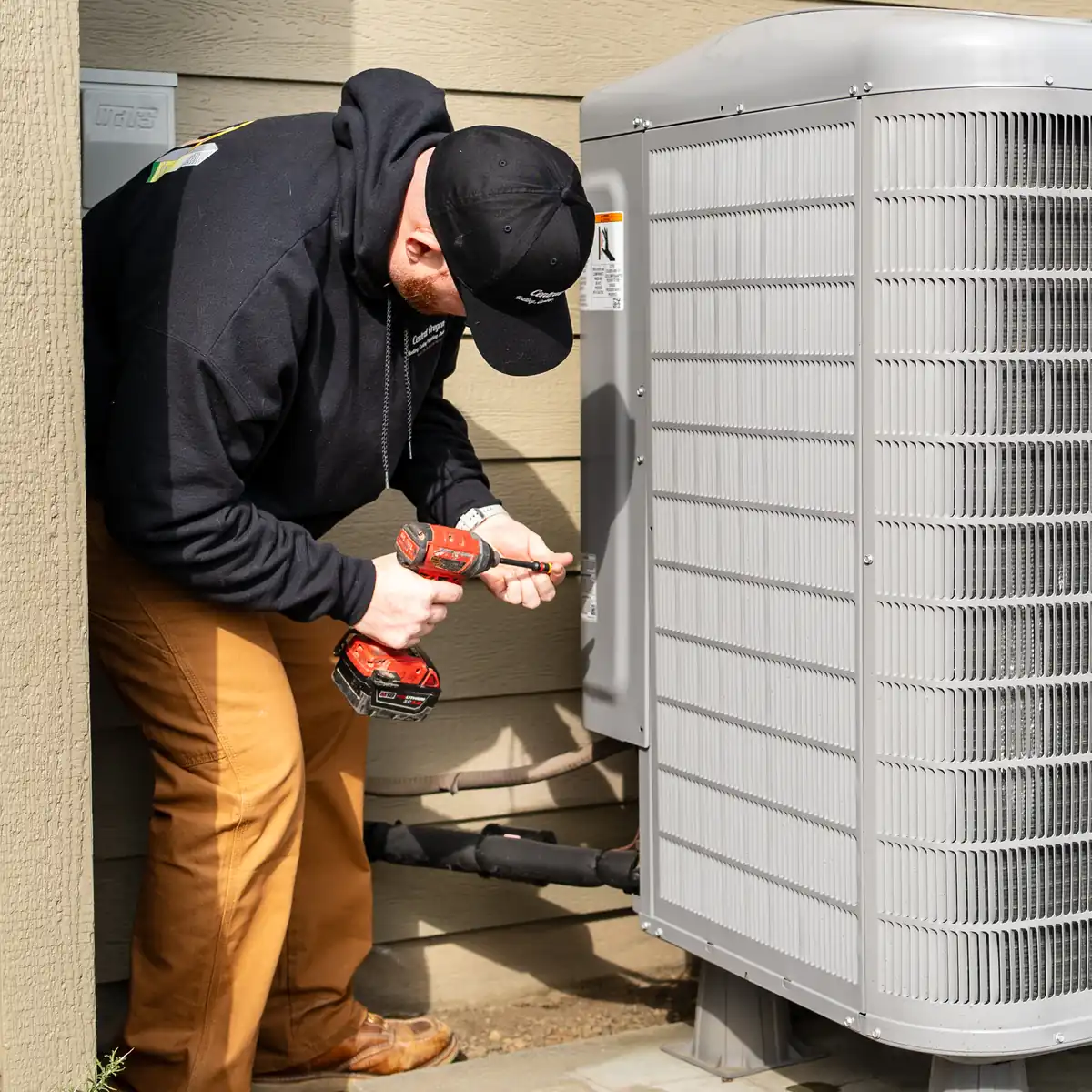
The AC compressor is responsible for pressurizing the refrigerant so that it can circulate back into your home. When the compressor stops working, you may experience warm, inconsistent airflow and problems with turning your AC on.
A broken compressor is an immediate cause for concern, especially during a Central Oregon heat wave. By performing some basic compressor troubleshooting, you can determine the extent of the problem and when you should reach out for professional help.
For more information about AC compressor troubleshooting, read on.
What Does an AC Compressor Do?
Your AC compressor is considered the heart of the air conditioning system because of its integral role in circulating refrigerant.
How the Compressor Works
The compressor is responsible for pressurizing and compressing the refrigerant into a high-pressure, high-temperature vapor. Then, the refrigerant is condensed into a liquid in the condenser. Afterward, the refrigerant can be circulated through the closed loops again in order to absorb your home’s heat.
Why the Compressor Is Considered the “Heart” of the AC System
Your entire AC depends on the compressor to function. Like the heart in the circulatory system, the compressor pumps and circulates refrigerant in your AC.
Common Compressor Types in Residential HVAC Systems
Depending on your system, you may have a single-stage, two-stage, or variable-speed compressor. Single-stage compressors are either 100% off or on, while two-stage compressors have a high or low setting. Meanwhile, variable-speed compressors can modulate their output, ensuring the best level of energy efficiency.
Signs Your AC Compressor May Be Failing
If you notice the following signs of a bad AC compressor, it’s time to reach out for professional AC diagnostics and repairs.
- Your AC Is Blowing Warm Air: An AC not cooling can be a compressor problem. When refrigerant isn’t circulating in your system properly, the resulting airflow in your home will be warm.
- The Outdoor Unit Won’t Turn On: An AC compressor not turning on may be due to a compressor failure or an electrical issue.
- Strange Noises Coming From the Outdoor Unit: Grinding, rattling, buzzing, clicking, and humming noises are all indications that your compressor may be failing.
- Circuit Breaker Keeps Tripping: A frequently tripped circuit breaker can occur if the compressor is under strain and pulling too much power from the circuit.
- Hard Starting or Delayed Startup: Any problem with the compressor, capacitor, or contactor can make it harder for your unit to start up.
- Vibrating or Shaking Outdoor Unit: Sometimes, compressor problems occur because of loose parts or poor mounting. When this happens, the outdoor unit may appear to vibrate or shake.
- Rising Energy Bills: A malfunctioning compressor is less efficient, so it uses more energy to maintain the same indoor temperature.
Common Causes of AC Compressor Problems
There are a few common causes that can lead to air conditioner compressor problems.
- Dirty Condenser Coils: As part of our compressor troubleshooting, we will inspect and clean your condenser coils. When these become dirty, they restrict airflow and cause overheating.
- Low Refrigerant Levels: Low refrigerant levels force the compressor to work harder than it should, which can eventually cause it to break down.
- Electrical Failures: Any issue with the wiring, capacitors, contactors, or voltage can damage the compressor.
- Lack of Maintenance: Poor maintenance can result in HVAC compressor issues by causing added stress on the compressor. For example, dirty air filters reduce airflow and make the compressor work harder.
- Overheating During Peak Summer Temperatures: Compressors run for longer periods during extreme heat. Eventually, this strain can damage the compressor.
- Dirty Air Filters Restricting Airflow: Restricted airflow from a dirty air filter strains the AC’s internal components.
- Age and Wear: Even with the best care and maintenance, normal wear and system aging can lead to compressor failure.
AC Compressor Troubleshooting Steps Homeowners Can Try
While complex AC compressor repairs should be left to the experts, there are some AC compressor troubleshooting steps you can handle on your own.
- Check Thermostat Settings: First, verify that your thermostat is set to “cool” mode and the appropriate temperature.
- Inspect and Replace the Air Filter: Clogged filters reduce airflow. For optimal performance, the filter should be changed every 30 to 90 days.
- Check the Circuit Breaker: A tripped breaker can shut off power to your outdoor unit, making it seem like it isn’t working. If the breaker trips repeatedly after resetting, contact an HVAC professional.
- Clear Debris Around the Outdoor Unit: An obstructed outdoor unit can impact your system’s airflow, so clear away debris and plant matter that are within 2 to 3 feet of the unit.
- Listen for Unusual Noises: Pay attention to noises coming from your compressor, such as grinding sounds, high-pitched screeching, clanking noises, or metallic banging sounds. These noises may indicate serious internal compressor damage.
- Look for Ice or Frost on Refrigerant Lines: When the AC has poor airflow or low refrigerant levels, frost and ice can build up on the refrigerant lines.
- Safety Warning About DIY Compressor Repairs: While you can handle basic compressor troubleshooting on your own, anything involving refrigerant lines or electrical components should be left to the experts.
When To Call an HVAC Professional
If you notice the following bad AC compressor symptoms, it’s time to schedule a professional inspection.
- Electrical Smells or Burning Odors: These smells mean that electrical components are overheating, which is a major fire risk.
- Compressor Will Not Start: If the compressor won’t start, you’ll need a professional to diagnose and repair the electrical component responsible.
- Loud Grinding or Metal Noises: These noises mean there is a risk of catastrophic failure. This type of problem should always be dealt with by a trained technician.
- Warm Air Persists After Basic Troubleshooting: If basic troubleshooting doesn’t help, a full inspection is necessary to diagnose the cause.
- Repeated Breaker Trips: Frequent breaker tripping means that there is an underlying electrical problem that needs to be addressed for the safety of your family and your HVAC system.
Repair vs. Replace: What Makes More Sense?
With the right decision-making framework, you can make it easier to choose between a full replacement and a basic AC repair in Central Oregon.
When Compressor Repair or Replacement Is Worth It
Newer systems and systems that have seldom had problems will likely last for years longer if you perform the needed compressor repair or replacement. If the capacitor, relay, or a minor component is at fault, the minor issue can be repaired instead of replacing the entire compressor. When the problem is the compressor itself, the entire compressor must be replaced.
When a Full AC Replacement Is the Better Investment
Older units and ACs that frequently require repairs are likely reaching the end of their lifespan. At this point, a replacement will be the most cost-effective choice. A full AC replacement also makes more sense if you’re dealing with high-cost repairs or have a unit that uses the phased-out R-22 refrigerant.
What To Expect From Your Compressor Replacement Cost
The cost of an AC compressor replacement can vary based on the brand, additional repair requirements, and other factors. In general, compressor replacements typically cost between $800 and $2,300.
If your system is still under warranty, the manufacturer may cover the cost of the compressor itself, meaning you would typically only pay for labor. However, if the system is older and no longer under warranty, the repair may involve additional components or more extensive work, which can significantly increase the overall cost.
How To Prevent AC Compressor Problems
To avoid compressor problems in the future, remember the following tips.
- Schedule HVAC maintenance in spring and fall to spot problems before they escalate.
- Change your filter every 30 to 90 days.
- Clean around your outdoor unit.
- Fix small repairs before they have a chance to damage the compressor.
- Install a smart thermostat to maximize your energy efficiency and minimize the strain on your unit.
Why Central Oregon Homeowners Trust Our HVAC Team
Local homeowners work with Central Oregon Heating, Cooling, Plumbing & Electrical for a few important reasons.
- Experienced AC Repair Technicians: Our team has years of experience working with local HVAC systems and providing accurate diagnostics.
- Fast Response Times: When a summer emergency arrives, it helps to have 24/7 support on your side.
- Honest Repair Recommendations: We never sell you on a product or service. Our team is committed to providing honest recommendations and transparent services.
- Serving Bend, Redmond & Surrounding Communities: Our local team serves homeowners throughout Bend, Redmond, and the surrounding communities.
Schedule AC Compressor Repair in Central Oregon
If your AC compressor troubleshooting indicates a repair is needed, our team can help. At Central Oregon, we offer fast diagnostics and emergency repair scheduling. After performing a system performance evaluation and AC inspection, we can quickly determine the underlying cause and the best solution for your family.
Schedule expert compressor diagnostics today.
Frequently Asked Questions About AC Compressors
What are the signs of a bad AC compressor?
A faulty compressor can cause grinding noises, warm airflow, rattling sounds, and frequently tripped circuit breakers. The unit may also vibrate or struggle to start.
Why is my AC compressor not turning on?
Capacitors and contactors work together to make the compressor start. If these components are faulty or the breaker is tripped, the compressor won’t get the electricity it needs to switch on.
Can a compressor be repaired instead of replaced?
If the compressor is truly damaged, it’s generally better to replace it. A minor relay issue or capacitor problem can be repaired. For a broken compressor, a replacement is often the only option.
Is it worth replacing a compressor on an older AC?
It depends. In many cases, an older AC is already near the end of its lifespan, so it makes more sense to replace the entire unit.
HVAC technicians often evaluate repair vs. replacement decisions using the $5,000 rule. Under this guideline, a replacement is generally a better choice if the cost of repairs multiplied by the age of the unit is over $5,000.
What causes an AC compressor to fail?
Dirty condenser coils, low refrigerant levels, improper installation, electrical malfunctions, and anything that causes extra wear can eventually cause the AC compressor to fail.
Service Request
"*" indicates required fields